The report from TCO Development, the organization behind the global sustainability certification for IT products TCO Certified, explains how everyone who buys/uses IT products can implement circular practices. It sets out how circular economy (CE) helps solve many pressing sustainability challenges linked to IT products and contains 33 expert tips on circular IT management.
Key findings:
Use IT products longer.
Circularity helps maximize the value of IT investment.
Market demand is key to accelerating the pace of change.
Circularity includes IT management throughout the life cycle.
Improved supply chain responsibility can speed up transition to CE.
Circularity is a team effort.
Many circular solutions are already in place - just use them.
The European Policy Centre’s (EPC) Task Force called Digital Roadmap to Circular Economy has explored the linkages between digitalisation and circular economy, the opportunities created by data and digitally-enabled solutions, and the challenges associated with harnessing their full potential for the transition to a circular economy.
The project represents a pioneering endeavour in exploring the interconnections between the digital and green transformations and considers the implications for EU policymaking.
The final publication The circular economy: Going digital and its executive summary show that digitalisation can offer enormous possibilities for the transition to a more sustainable, circular economy but it is essential to steer it in the right direction.
The Data Centre Industry (DCI) generates a huge amount of WEEE. The current infrastructure for dealing with this is underdeveloped and must be addressed now.
CEDaCI will build a Circular Economy for the Data Centre Industry by bringing together stakeholders from all equipment lifecycle stages.The end goal is to turn this WEEE into a useful resource and support the ongoing rapid growth of the DCI.
The CEDaCI Network brings together actors and experts from all life cycle stages and sub-sectors directly and indirectly associated with the DCI.
Members are helped to make the best choices to develop and grow their business sustainability, through access to case studies, business models and a Decision Making Tool. They can also connect to CEDaCI project partners and members
The Data Centre Industry (DCI) is one of the most important pillars of current technological and economic developments.
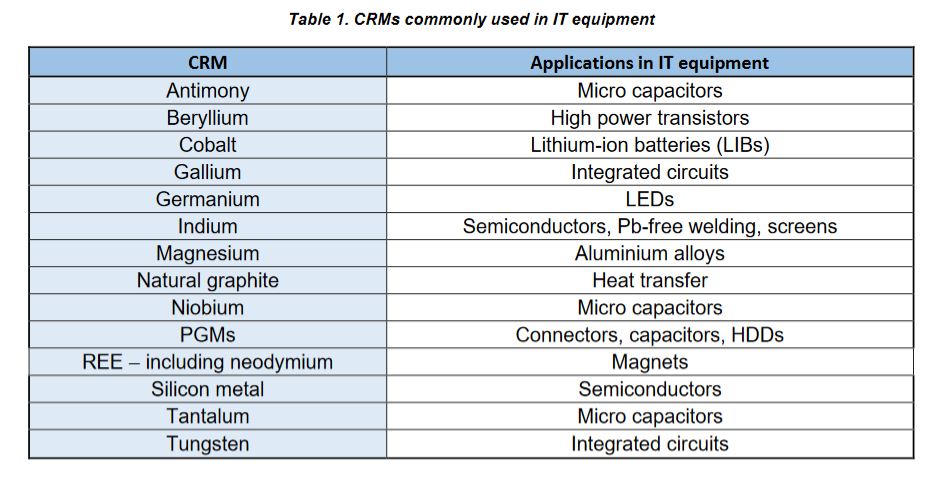
In DCIs, more than fifty different materials can be found per product, including ferrous, non-ferrous metals, precious metals (PM), platinum group metals (PGM), rare earth elements (REE), plastics and/or ceramics, some being considered as Critical Raw Materials (CRMs).
This assessment aims to study DCI design and material composition (specifically servers and switches), as well as to analyse their performance in a circular economy and provide recommendations for ecodesign guidelines.
How can the EU product safety and compliance framework help promote product durability and tackle planned obsolescence, foster the production of more sustainable products, and achieve more transparent supply chains for consumers?
Product longevity can play a useful role in achieving the Paris Agreement goals – material efficiency is an important contributor to energy efficiency and is also important in its own right. The product safety and compliance instruments available at European level can contribute to these efforts, if wisely applied.
This study was commissioned by the European Parliament Committee on Internal Market and Consumer Protection (IMCO).
Research on Remelting and Purification of Si-kerf for PV wafers is part of CABRISS, a European collaboration aimed to develop a circular economy mainly for the photovoltaic but also other industries such as electronics or metallurgy.
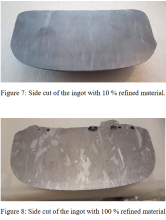
During production of silicon wafers out of silicon (Si) ingots and wafers, about 40–50% of the material is lost due to the cutting technique. The research had kerf from slurry based wafer cuttings undergoing several refining steps and being remelted into ingots for PV-application.
Conclusion: With 10% refined material, ingots were still directionally solidified, whereas with 100% refined material, they were not. The presented refining method does not allow for ingots with 100% refined material to be used as PV-material.
The project Recycling of broken Si based structures and solar cells is part of CABRISS, a European collaboration aimed to develop a circular economy mainly for the photovoltaic (PV), but also for other industries such as electronics or metallurgy.
The paper presents some tests in which broken solar cell structures coming from an early stage in the PV production process chain as well as broken finished solar cells have been recycled into new silicon (Si) feedstock through demetallisation, purification and directional solidification.
The paper explores two different routes to remove diffusion layers and anti-reflection coating (ARC) on broken cells. It also presents the characteristics of ingots produced with the Si-feedstock from the two routes by directional solidification.
Refurbed is an online marketplace for refurbished electronics. Its products look like new, are 40% cheaper and use 70% less CO2 than the equivalent new product.
At times of Covid-19 quarantine, Belgian startup ASmartWorld who reconditions second-hand smartphones, took the initiative to distribute them free of charge in old people's homes to help guests reconnect with their families.