As a growing community of European frontrunner festivals, Green Deal Circular Festivals strives for fully circular and climate neutral festivals, as festivals can play a guiding role in inspiring a green movement and accelerate society’s transition.
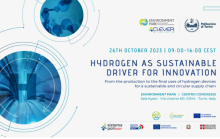
On 26 October, Environment Park in Turin (Italy) will host the event Hydrogen as Sustainable Driver for Innovation - From the production to the final uses of hydrogen devices for a sustainable and circular supply chain.
Taking an overall lifecycle perspective to production, design, manufacturing and the final use of hydrogen devices, this event will explore the sustainability dimension of some of the main steps in the hydrogen value chain.
The 4th International Conference on Strategies toward Green Deal Implementation – Water, Raw Materials & Energy (ICGreenDeal2023) will take place on 14-15 December. It will tackle climate change and ways to prevent it, including innovative solutions (technological, environmental, economic and social) that can be implemented under the Green Deal Strategies.
After Pazardzhik, Barcelona and Naples, the Biocircularcities partners are coming to Brussels on 28 September. Come and be inspired to bring the Biocircularcities approach to your garden by learning more about the project and its results. Discuss the future of a circular bioeconomy in Europe and exchange notes with your peers.
Re-think Circular Economy Forum is an event designed to present a vision on macro-trends, possible evolutionary paths, and main projects concerning the Circular Economy on a local, national and international level. It wants to encourage the development of Circular Economy in Taranto and in the rest of Apulia territory.
At the Handelsblatt Circular Economy conference, the central role of industry, business, politics and science in implementing the circular economy will be discussed under the motto "reverse thinking".
The conference brings together top thinkers, decision makers and experts who already have experience in implementing circular economy solutions.
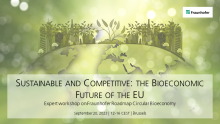
On 20 September, the Fraunhofer EU Office in Brussels will be holding a workshop to discuss its Roadmap for the Future Development of the Circular Bioeconomy. The workshop will explore the scientific and technological potential and challenges of the bioeconomy, how the bioeconomy can meet ecological and socioeconomic needs, and the policy framework needed to achieve this.
Participants will seek to identify solutions for the four application areas of bioeconomy: nutrition, biomass material utilisation, CO2 value creation and the socio-economic aspects of the bioeconomy.
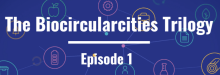
The first episode of the Biocircularcities Trilogy unveils the story behind the success of the BBI-JU Biocircularcities project or how partners supported a transition of the pilot territories toward circular bioeconomy through a collaborative approach.
The European Commission has launched the LIFE Programme’s 2023 Calls for project proposals. This year, there are 611 million EUR available for nature conservation, environmental protection, climate action, and clean energy transition projects.
Kosovo, a potential EU candidate country, has embarked on an ambitious journey – the transition towards a circular economy. The aim of this journey is:
to preserve the country’s nature and rich biodiversity
to valorise its resources and talent,
to contribute to a more resilient and regenerative economy and a society where everyone has the opportunity to live a good life.
This roadmap by Kosovo's Ministry of Environment, Spatial Planning and Infrastructure identifies six priority areas: a) food and b) forestry systems, c) creative and d) retail sectors, e) built environment and the f) manufacturing sector.
Given the strong interdependency of these sectors, the Roadmap also introduces horizontal areas that enable and support priority areas and further promote circular transition.