This reflection paper explains how materials will enable solutions for a healthy, safe, resilient society and stronger economy to answer citizen demands. It includes strategic research agendas (SRAs), proposals, solutions, and recommendations of Alliance for Materials A4M community towards Horizon Europe in the post-COVID scenario. COVID-19 has affected the development of current strategies to face societal challenges and led to a reflection on a new global economic model where circular economy will play a prominent role.
The paper puts forward proposals for strategic research and innovation activities to the European Commission, Member States, and the European Parliament, taking into account the objectives of the Green Deal Priorities and Recovery Plan.
EU environmental rules aim to ensure that end-of-life vehicles are managed sustainably. They seek to eliminate hazardous substances in cars and require that most ELV parts and materials are reused or recycled.
The Commission would like to hear your views on its proposal to improve collection, treatment and recycling of ELVs. You can give your feedback on this initiative until 19 November 2020.
Saccharides are a valuable and readily available source of renewable carbon. There are unique opportunities to produce renewable intermediate chemicals and polymers from regionally available agricultural products and imported feedstock in the period up to 2050.
Industry in the Chemport region (Northern Netherlands) has several options to further reduce CO2 emissions, including recycling or circular chemistry and shifting towards bio-based feedstock, acting as a catalyzer for other industries.
Important focus areas of the saccharide roadmap are:
developing technologies/markets
strengthening/expanding feedstock production
developing incentives/regulations
further developing an integrated approach, cooperating and improving the knowledge base.
The Ministry of Environmental Protection of the Republic of Serbia has developed a Roadmap for the circular economy in Serbia, a document that aims to bring together, connect and promote all those actors whose knowledge, innovativeness and creativity can contribute to a faster transition to the circular economy.
The roadmap seeks to encourage the private sector to use circular business models and to motivate industry to create new jobs, as well as to inspire a shift in business operations through the introduction of innovative and sustainable solutions. The roadmap has been developed by the Circular Economy Platform for Sustainable Development in Serbia project, which was initiated and implemented by the United Nations Development Program (UNDP).
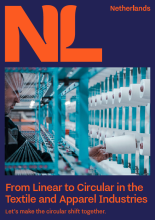
The brochure highlights Dutch circular frontrunners that make a change - just a fraction of the initiatives, organisations and technologies available. Only the most inspiring examples have been selected, with a potential to be upscaled and implemented in other parts of the world, hoping that they will also inspire and encourage others to collaborate and make a change.
The European Commission has decided to launch a €1 billion call for research and innovation projects that respond to the climate crisis and help protect Europe’s unique ecosystems and biodiversity. The Horizon 2020-funded European Green Deal Call is open for registration. It will spur Europe’s recovery from the coronavirus crisis by turning green challenges into innovation opportunities.
A solvent-free adhesive that is suitable for recycling and also for bonding of recycled plastic films has been developed by Henkel to be used for multilayer packaging.
The aim of Poland's Roadmap towards the Transition to the Circular Economy (CE), which was adopted in 2019, is twofold: first, to identify cross-cutting measures capable of having the broadest possible impact in Poland, both socially and economically; and second, to prioritise areas that will enable Poland to take advantage of its current opportunities, and to deal with existing or future challenges.
The Roadmap focusses on 5 areas in particular:
Sustainable industrial production
Sustainable consumption
Bioeconomy
New business models
implementation, monitoring and financing of CE.
The Roadmap includes a set of tools, which are not purely legislative, to create the conditions for a new economic model in Poland.