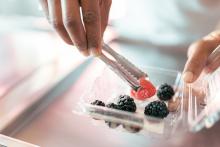
The Horizon Europe GRECO project aims to deliver innovative biobased, biodegradable and recyclable food packaging based on novel PLA copolymers, functional coatings, additives and green catalysts.
It's starting next month - be interesting to see how it develops!
Developing sustainable materials and utilizing recycled feedstock in material manufacturing requires a lot of laboratory testing to ensure that the new material meets functionality and safety standards. Measurlabs performs these tests!
The Plastics Technology Centre, AIMPLAS, is launching the AIMPLAS Challenge Forum. It will bring together international experts, companies, universities and research centres to address the significant challenges facing the plastics industry and explore innovative solutions through research and collaboration.
IMERO's e-label.eu platform transforms traditional product labelling into a sustainable digital alternative, significantly reducing resource use, waste and environmental impact. Through comprehensive digital product information, it enhances transparency, supports informed consumer decisions and promotes efficient recycling practices.
The PlastTalk webinar series brings together individuals interested in the circular economy of plastics. It highlights current phenomena and disseminates good circular economy practices. The speakers are researchers and experts in the circular economy, and each webinar features interesting circular economy actors and practical examples.
This webinar will explore one of the most crucial strategies for tackling plastic waste: reuse.
Circul'R and Loop have recently launched the reuse coalition for household, beauty and hygiene products in supermarkets. This webinar will present the coalition to interested brands.
The UP Scorecard is a free, easy-to-use web-based tool which enables corporate procurement agents to assess the impacts of foodware and food packaging on human and environmental health.
It was developed by a cross-industry group of leading food service companies, NGOs and technical experts using life cycle assessment science. It conveys the information in an easy-to-use way and enables buyers to compare the merits of specific food containers.
The COM4PHA research project is working on developing new bioplastics for use in the packaging and agricultural sectors. The new formulations for packaging will be biodegradable and compostable, and the coating formulations will improve product quality and extend shelf life.
Big changes are coming for the plastics industry: new policies, new requirements, new criteria. This seminar aims to help industry professionals get to grips with them.
IFAT Munich is the world’s leading trade fair for environmental technologies.
It is a solution platform, a networking event and a knowledge hub, and brings together the key international industry representatives from politics, business and science. Find out about cutting-edge solutions for water, recycling and circularity, with a strong focus on innovations with a global impact.