The European Commission is preparing a legislative proposal on the Right to Repair, headed “Sustainable consumption of goods – promoting repair and reuse”. The overall goal of the initiative is to extend the time during which consumers use the product before discarding it.
The public consultation and call for evidence are currently ongoing and will run until 5 April 2022.
While digital networking is of great advantage for everyday life, the incredible amounts of electrical devices bring with it some particularly ecological risks, especially with regard to the use of resources. This is why the European Commission in the New Circular Economy Action Plan announced a Circular Electronics Initiative. There are still many challenges to be discussed during this workshop.
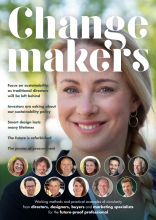
ChangeMakers is a magazine published by Circularities together with Circl/ABN Amro Bank. Readers can learn about working methods and practical examples of circularity from directors, designers, buyers and marketing specialists from companies like Philips, Bugaboo, Fairphone and Mitsubishi.
The magazine aims to inspire future-proof professionals with a wealth of interviews from people who really know what they're talking about and feel passionate about the circular transition. Each section tackles the circular economy from a different perspective: for instance, directors speak about how they need to steer their companies and designers talk about the principles underpinning their work.
If you're interested in circular issues, this magazine is well worth the read!
Yuman Village is a temple of the circular economy located in Brussels. It offers a unique 'one stop shopping' experience that encourages the emergence of new circular economy models, creates local jobs and reduces the number of trips needed to buy sustainable and local products.
Atelier Riforma started as a social economy startup with a pioneer marketplace for upcycled garments. Realising that the sorting and cataloguing of textile waste were too labour-intensive for industry standards, founders came up with the idea of developing an AI-based automated solution - called Re4circular - to create a digitized and truly efficient post-consumer clothing supply chain.
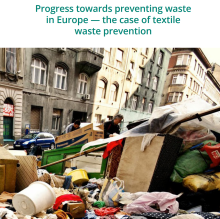
Waste prevention is the best waste management policy option, according to the waste hierarchy - the EU's main rule for the environmental ranking of waste management policies. Its main objective is to reduce waste generation, the environmental impacts of waste management and the hazardousness of the waste generated.
To support this objective, the EU and all its Member States have put in place legislation that promotes activities in products' life cycles aimed at reducing the amount of waste generated.
This report aims to assess progress towards the main objective of waste prevention: decoupling (i. e. breaking the link between waste generation and economic growth).
Within the framework of the Circular Economy Initiative Deutschland (CEID) and its three interdisciplinary and cross-sectoral working groups, more than 130 experts from industry, science and civil society have summed up their findings in the Circular Economy (CE) Roadmap for Germany, which consists of a consolidated opinion addressing society as a whole.
This Roadmap, which has focused - right from the beginning - on shaping a consistent and common target vision for a circular economy in 2030, is a scientifically-based framework for action that systemically describes the necessary steps for Germany to transition to a CE and provides decision-makers from politics, industry and science with concrete recommendations for action.