The post-COVID-19 recovery plan should be extensive, as the effects of the pandemic on people and economy have, in many cases, been devastating. The recovery plan must also fully support the green transition to guarantee resilience over the long term.
The circular economy has the potential to raise EU GDP by billions of euros, and create around 700,000 extra jobs by 2030. With this in mind, the economic approach should be an integral part of that recovery. It is one of the messages of a new EUROCITIES policy statement on the EU Circular Economy Action Plan that sets out how cities, as significant engines for economic growth, can drive the circular economy to unlock economic, environmental and social benefits.
AIMPLAS, the Plastics Technology Centre, is coordinating a project called C-SERVEES to develop more circular products like washing machines, laser printers and toner cartridges, TV sets and telecom equipment.
Greater circularity and more efficient use of materials present new opportunities for further reducing greenhouse gas emissions.
A new methodology can help to identify which circular economy actions in each sector can make the most promising contributions to meeting targets to reduce emissions and to achieving climate neutrality in Europe.
In the buildings sector, selected circular economy actions can lead to reductions of up to 61 % in the materials-related greenhouse gases emitted across buildings’ life cycles.
In 2019 the European Commission set out a policy guideline to address global environmental challenges and circularity. EURATEXand its members welcome the ambition of the EU Institutions to change the old way and commit to engage with all relevant parties to deliver and implement a new Textile Strategy to boost the circular economy and be fit for the present and future generations.
This strategy by EURATEX is a starting point, with insights into solutions based on a 14-month consultation with members, involving over 100 companies and key stakeholders, focused on applied circular practices and future opportunities. It prioritises removing barriers to a large-scale uptake of circular economy in textiles, sets out 12 key points and puts forward 38 proposals.
Based on a circular economic model that combines ecology and economy, b:bot is a machine and digital ecosystem for the collection of PET plastic bottles - with a real social and environmental impact.
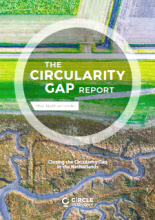
The Dutch economy is 24.5% circular. Measures in four key sectors can triple the national circularity rate and help the government achieve its ambitions for a fully circular economy by 2050.
On 3 June, Circle Economy launched the Circularity Gap Report for the Netherlands. The report shows that the Netherlands is a circular frontrunner: the country's circularity rate is three times higher than the global rate of 8.6%. Consuming 221 million tonnes of materials each year, the Netherlands retrieves one quarter from non-virgin, secondary sources. However, if the government is to achieve its ambitions of full circularity by 2050, a major overhaul of the national economy, including jobs, will still be necessary.
Plastics represent a serious waste-handling problem with only 10% of the plastic waste generated worldwide being recycled. Plastics recycling is instrumental to close the loop of the circular economy by re-introducing into the economy high-quality plastic recyclates incorporated into new products.
The brochure highlights the importance of moving towards a circular economy for plastics in Europe. It identifies the most commonly used types of plastics and describes the current state-of-play, challenges faced by the European mechanical plastics recycling industry and key recommendations for overcoming them. Plastics recycling’s environmental benefits and economic importance are also touched upon.
At the beginning of June 2020 the Spanish Government published España Circular 2030, the new Strategy for Circular Economy in Spain until 2030. It contains circular economy objectives and a series of strategic orientations for the period 2020-2030.
The strategy:
sets up a series of objectives for 2020-2030 which will, inter alia, allow a 30% reduction in the national consumption of resources and a 15% reduction in waste generation (as compared to 2010);
contributes to Spain's efforts to transition to a sustainable, decarbonized, resource-efficient and competitive economy;
takes the form of successive three-year action plans providing for concrete measures to deliver on circular economy.