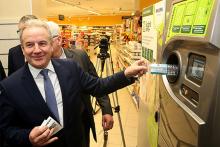
In February 2016, the government of Lithuania implemented a “deposit return system”, to give consumers an incentive to return used beverage containers for recycling. To combat litter and increase collection and recycling rates, consumers would pay a deposit amount of €0.10 when purchasing eligible drink containers, to be refunded when the empty container is returned for recycling.
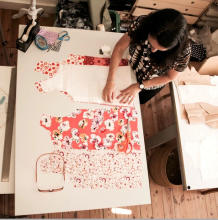
ISATIÓ was a Brussels SME that recovered samples from the textiles industry to create unique designer clothing, with manufacturing all done locally and the supply chain covered entirely by bicycle couriers.
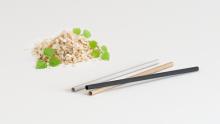
Sulapac has developed a fully biodegradable and microplastic-free material which can replace plastic. The bio-based material is both recyclable and mass-producible and is available as granules or final products.
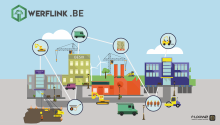
Werflink is an online sharing platform on which construction sites and companies and can share equipment, materials, resources, freight space and facilities. The platform has been set up in collaboration with the Flemish Construction Confederation, construction company BESIX, Circular Flanders and FLOOW2, to create a more circular construction sector.
The Super Circular Estate project addresses the challenge of changing housing needs. The Parkstad Limburg region’s population, is estimated to shrink by 27% in the next 30 years, calling for a radical reorientation in housing facilities. The project aims at demolishing vacant outdated high-rise apartment buildings, and reuse their components to establish new social housing units.
In October 2015 the Luxembourg government named the municipality of Wiltz a Circular Economy Hotspot. In February 2018 Wiltz renewed its political commitment with a Circular Economy Charter signed by its municipal council, by which it undertook to mainstream the circular economy in its future project and activities.
The 2023-2029 political declaration keeps up this momentum.
The Climate Pact was initially set up by Luxembourg's Ministry of Sustainable Development and Infrastructure. The goal was to enable municipalities wishing to tackle climate change to request State support by signing an engagement charter.
The Climate Pact 2.0 is operated by the Ministry for the Environment, Climate and Biodiversity. It includes measures on greenhouse gas reduction, energy efficiency, renewable energy, air quality, the circular economy and climate change adaptation.
Water2REturn was an Innovation Action co-funded by the European Commission under its Horizon 2020 programme. It focused on the recovery and recycling of nutrients from slaughterhouse wastewater as part of a circular economy model.
Sfridoo.com is an Italian B2B platform for purchasing and selling scrap materials. Using sharing economy principles to turn the circular economy into a reality, Sfridoo has already enabled more than 2500 businesses to recycle and reuse industrial scraps.
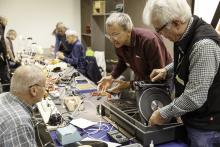
Munich has taken its ambitious waste reduction strategy to the next level by developing an innovative reuse lab and shop concept. Its Halle 2 municipal secondhand store not only enables people to take responsibility for living more sustainably, it also provides opportunities for job creation, educational programmes and voluntary activities.