The Italian project BIOCOSI (BIOdegradable and COmpostable packaging for sustainable, circular and smart industry) came up with a revolutionary solution to the problem of wastewater in the dairy sector.
Tedre Farm, located in Southern Estonia, grows raspberries and produces raspberry juice and other derivatives.
In 2017, in a collaboration with the Estonian University of Life Sciences, it started a project to study technologies for the extraction of oil from raspberry seeds, particularly known for its medicinal properties.
Stop Food Waste is an Irish initiative which aims to prevent food waste through better buying, storage and cooking, as well as through home composting.
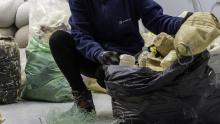
In order to create a new commercial use for raw wool, the Italian association Post Industriale Ruralità has developed a form of vertical hydroponic cultivation using wool instead of soil.
Concular disrupts the construction industry by developing a circular process for material flow. The system is based on an AI-driven platform that matches buyers’ demand for construction material with suppliers’ circular materials.
Rue Rangoli is a French social enterprise that supports social organisations involved in upcycling or zero-waste and the design circular economy, based in Europe, Africa and Asia.
In the third year of the RepescaPlas project, chemical recycling will be used to turn marine litter into fuel for fishing boats. During the first two years of the RepescaPlas project, five tonnes of marine litter were recovered through mechanical recycling operations.
In 2018, the City of Antwerp kick-started the Circular South project. The aim is to encourage more efficient use of energy, water, waste and materials by the citizens of the New South district of Antwerp through an innovative community-driven approach.
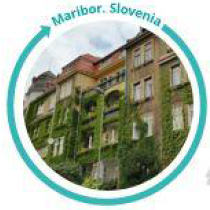
The WCYCLE Maribor project provides for an innovative urban circular economy system, offering a new business and economic model for the city in the field of efficient resource management.