Servicios Medioambientales de Valencia processes used mattresses into fractions for reuse. Their scalable model produces bales of polyurethane foam and steel which can be used as secondary raw materials.
RE-ZIP is an innovative, circular packaging solution designed to reduce waste in e-commerce. It provides reusable packaging options that replace traditional single-use packaging, helping e-commerce businesses lower their environmental impact.
As a growing community of European frontrunner festivals, Green Deal Circular Festivals strives for fully circular and climate neutral festivals, as festivals can play a guiding role in inspiring a green movement and accelerate society’s transition.
The Hydro Ben project focuses on resource recovery for reuse in other industrial activities. It consists of recovering fatty substances from wastewater in professional catering facilities, by means of a special device which is placed under the sink.
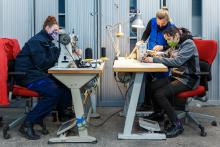
remesh is a socio-professional business workshop with an environmental impact. Most of its employees are women from disadvantaged background. The workshop is also providing a circular economy business model as they reuse advertising banners and meshes to make new products that are fashionable but sustainable.
The Italian Cartiera is an ethical fashion workshop founded in Lama di Reno, Marzabotto, in 2017 which makes leather and fabric items.
Believing strongly that work is an extraordinary tool for social inclusion, Cartiera offers paths for employment and integration of disadvantaged people, mainly refugees and asylum seekers.
Agroamb Prodalt SL is a rural SME working in the primary sector. It provides agricultural services for farmers and organic fertilisers from biodegradable waste generated in the primary and agri-food sectors. Its process sanitises biodegradable waste and animal by-products with lime and produces organic fertilisers (turning these waste materials into resources).
Ekofungi is a Serbian company that takes a 100% circular approach to mushroom cultivation. It has pioneered a technology for sustainable cultivation of edible mushrooms using recycled cellulose waste. Each year, Ekofungi grows 130 tons of mushrooms which are either sold fresh or dehydrated and mixed with other vegetables.
Italy's Puglia Region has large expanses of olive groves. Pruning these trees yields around 800 kilotonnes of residual biomass each year and Fiusis uses this biomass to produce energy.