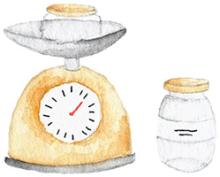
Ligeti Bolt is a packaging-free grocery shopin Budapest. The shop does not sell any products in plastic wrapping or packaging and so customers buy exactly the amount they need.
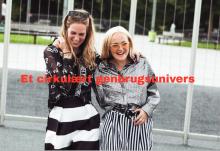
Based in the Danish capital Copenhagen, Veras operates several initiatives to reduce waste in the fashion sector by making it easy for everyone to swap and sell clothes. Veras is primarily an online webshop shipping to all Europe, where users can send in their own clothes. It also hosts weekly clothing markets for everyone to buy and sell clothing and has a flagship store in Copenhagen.
Korp is a B2B platform which enables companies to exchange goods and services for goods and services.
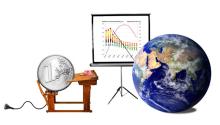
The idea is that businesses can expand without having to lay out the cash first, and unwanted items are circulated rather than being disposed of as waste. Purchases and sales are settled via the in-house "currency" Korp credits, where I Korp credit is equal to 1 euro. Only verified businesses can join the network.
Services include marketing, communication and printing, while goods would include wine, furniture and advertising items. There have been 37 million swaps so far...
Korp is also a way for businesses to find new clients and show off their expertise.
The Grand-Duchy of Luxembourg is a frontrunner in many economic sectors, including finance, construction, data-driven innovation and space resources.
In recent years, the country has sought to position itself as a hotspot for the circular economy (CE) and many ongoing public and private initiatives support this claim.
Based on these fruitful experiences and the recognition of the CE as a high priority by the Luxembourg government, which has made it a major feature of the 2018-2023 Government agreement, the current strategy aims to take the CE in Luxembourg to the next level. It identifies proven regulatory, financial and information management methods and tools for boosting circular initiatives, and proposes a methodology for using them in a number of key economic sectors.
The New Consumer Agenda provides for the establishment of a Consumer Policy Advisory Group. There are still several seats to fill, and the European Commission would encourage environmental organisations and individual experts to apply. The deadline for applications is 20 May 2021.
Guidance for evaluating waste prevention programmes provides guidelines and practical advice and highlights case studies to help all EEA member countries evaluate their waste prevention programmes.
Sitra commissioned this study to investigate whether and under what assumptions and policy measures the decoupling of CO2 emissions from economic growth could occur at a sufficient rate for CO2 emissions to decline to net zero by 2050. The analyses were carried out on a global level.
The results of this study show that deep CO2 emission cuts in line with the 1.5 °C target and positive GDP growth can occur at the same time.
A natural next step would be to analyse in detail the decoupling of other harmful environmental impacts from economic growth. For example, a global shift to more circular business models could reduce CO2 emissions and help cut the use of materials and natural resources while maintaining economic growth.
Circular Gothenburg focuses on resource efficiency to reduce climate change and achieve circular material flows.
It has three target groups: citizens, city departments and businesses. For all three target groups, the goal is to make it simple, straightforward and attractive to participate in transformational circular work. This includes the municipality’s in-house processes and activities which help people to live in a more circular way. One of these activities is the Fixotek: staffed facilities, close to where people live and open to everyone, where people can meet, learn, repair and redesign products, borrow tools and swap toys, clothes and books.
Stop Food Waste is an Irish initiative which aims to prevent food waste through better buying, storage and cooking, as well as through home composting.
Repairmystuff is an online platform based in Ireland which supports, promotes and encourages the repair industry in Ireland.
It promotes a circular economy by providing a free online space for repair companies. It aims to give consumers more options for accessing repair services throughout the country. It also provides consumers with a search tool which suggests service providers according to what needs to be repaired and where in the country the person is located.