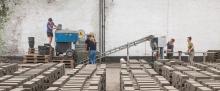
At its production site in Brussels, BC materials blends and transforms ordinary earth streams - what some consider to be waste - into perfectly circular building materials.
This retrospective report is a review of the plans set out by Circular Flanders in the Kick-off Statement.
The most important finding? A good deal more was accomplished than initially anticipated. For example, the opportunity to launch three Open Calls, permitting the funding of over 130 innovative circular economy projects. The Green Deal on Circular Construction was also an unprecedented opportunity, as was the complementary reinforcement of the OVAM team of experts in ecodesign and area-specific operations, allowing the scope to expand.
This retrospective report is an interactive PDF. External links to downloads or online resources have been embedded on each project page for easy accessibility.
restado is a platform promoting a circular approach in the construction sector.
The platform encourages the reuse of reclaimed construction materials. It provides support and knowledge on how to reclaim and reuse the materials, and offers a marketplace to trade them.
"Chambers for a Circular Economy - Actions to Support SMEs' Transition to a Circular Economy" aims to offer a clear overview of the wide range of initiatives led or co-managed by Eurochambers in the field of the Circular Economy, with the intention not only to inform and share innovative actions, but also to spur and motivate synergies, triggering collaborations and the creation of new business models. The aim of each and every of these projects is to enable businesses to evolve from a linear to a circular mode of production and consumption.
This publication presents a total of 32 projects initiated or co-led by Chambers in 13 countries, and categorized under 5 main topics:
Social Cooperative Humana Nova Čakovec encourages the employment of disabled and other socially excluded persons for the production and sale of quality and innovative textile products made from ecological and recycled fabrics for the local and regional markets.
The textile industry is the second most polluting industry in the world. The Next Closet’s mission is change this and inspire people to invest in quality and reuse what they already have, so second hand can become the number one choice.
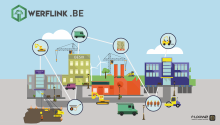
Werflink is an online sharing platform on which construction sites and companies and can share equipment, materials, resources, freight space and facilities. The platform has been set up in collaboration with the Flemish Construction Confederation, construction company BESIX, Circular Flanders and FLOOW2, to create a more circular construction sector.
The Caverne d'Ali Baba (Ali Baba thieve's cave) is an initiative by and for students in the art school of ESA Saint-Luc, in Brussels.
According to the Fédération des Récupérathèques, of which the initiative belongs to, the service stands as a shared and co-managed warehouse of reuse materials, available to students for any of their creative projects.
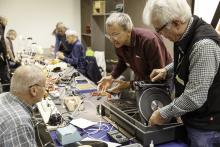
Kierrätyskeskus is a network of secondhand shops in the Helsinki area. As well as selling on donated items, they repair electrical goods and offer training sessions on the circular economy.
Munich has taken its ambitious waste reduction strategy to the next level by developing an innovative reuse lab and shop concept. Its Halle 2 municipal secondhand store not only enables people to take responsibility for living more sustainably, it also provides opportunities for job creation, educational programmes and voluntary activities.