At the beginning of June 2020 the Spanish Government published España Circular 2030, the new Strategy for Circular Economy in Spain until 2030. It contains circular economy objectives and a series of strategic orientations for the period 2020-2030.
The strategy:
sets up a series of objectives for 2020-2030 which will, inter alia, allow a 30% reduction in the national consumption of resources and a 15% reduction in waste generation (as compared to 2010);
contributes to Spain's efforts to transition to a sustainable, decarbonized, resource-efficient and competitive economy;
takes the form of successive three-year action plans providing for concrete measures to deliver on circular economy.
SCALER provides mechanisms to accelerate the journey towards efficient and quick implementation of industrial symbiosis in the European process industry. They do this by developing action plans and adapted solutions to industrial stakeholders and communities.
SCALER works closely with a wide range of stakeholders including industrial networks, consultancies, researchers and policy makers at various geographic and political levels, to deliver practical tools and guidelines for industry actors engaging in resource efficiency, reuse and sharing.
To achieve this goal, SCALER is developing a set of reports and guides. They offer insights into how businesses can start industrial resource synergies with other companies to minimise their waste and create more value from their production.
The Circular Aluminium Action Plan is the aluminium sector’s strategy for achieving aluminium’s full potential for a circular economy by 2030. The action plan aims to ensure that all end-of-life aluminium products are collected and recycled efficiently in Europe to maximise the aluminium recycling rates and to keep the material in active use. It builds on the aluminium industry’s Vision 2050 and provides policy recommendations for the sector.
The aluminium industry has the potential to be a key driver in achieving Europe’s ambitions for a climate-neutral and circular economy. Aluminium is by nature circular and fit for multiple recycling: it can be recycled over and over again without losing its original properties (lightness, conductivity, formability, durability, impermeability).
The city of Leuven, in Flanders, aims to play a leading role in initiating systemic change in cities and society at large.
The Roadmap 2025 · 2035 · 2050, drawn up by Leuven 2030 and numerous experts, serves as a guide to achieving the goal of a climate-neutral city by 2050. In September 2019 a professional team of programme managers started on no less than 13 specific programmes, which will transform this unique plan into concrete actions and impact on the field.
Leuven Circulair finds its place in specific programme #09, outlining key actions for circularity in the city with a strong focus on social, repair, refurbishment, knowledge and expertise from the University of Leuven and local fablabs.
The Data Centre Industry (DCI) is one of the most important pillars of current technological and economic developments.
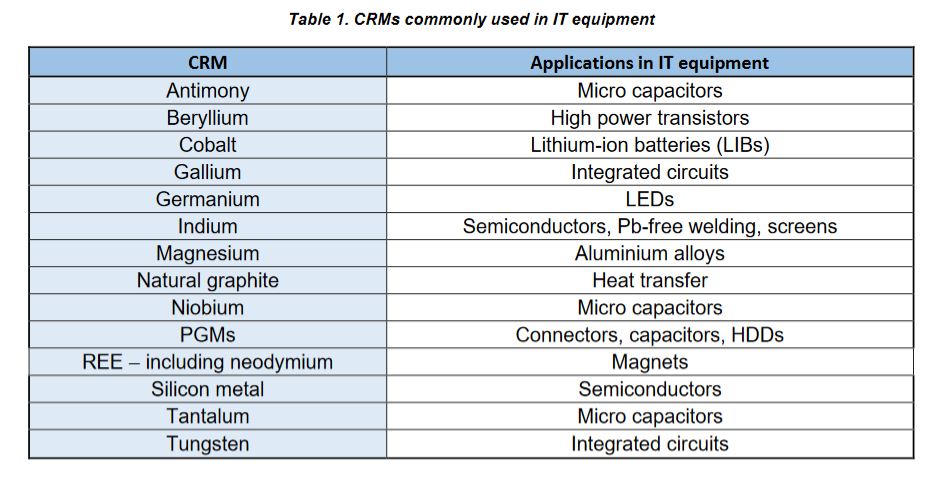
In DCIs, more than fifty different materials can be found per product, including ferrous, non-ferrous metals, precious metals (PM), platinum group metals (PGM), rare earth elements (REE), plastics and/or ceramics, some being considered as Critical Raw Materials (CRMs).
This assessment aims to study DCI design and material composition (specifically servers and switches), as well as to analyse their performance in a circular economy and provide recommendations for ecodesign guidelines.
This review paper of Mark Anthony Camilleri examines relevant regulatory guidelines, policies, and recommendations on sustainable development, where it traces the origins of circular economy (CE). It goes on to shed light on key theoretical underpinnings of CE's closed loop and product service systems.
The findings suggest that the CE's regenerative systems minimise the environmental impact as practitioners reduce their externalities, including waste, emissions, and energy leakages through the use and reuse of resources. Therefore, this contribution offers a critique on CE's inherent limitations and discusses about the implications of having regulatory interventions that are intended to encourage responsible consumption and production behaviours.
Le secteur de l’événementiel est plus que jamais concerné par les enjeux de durabilité et de préservation des ressources. Conscients de la nécessité de concilier l’organisation d’événements et l’économie circulaire, les acteurs du secteur doivent se mobiliser davantage afin de mettre en œuvre les leviers d’action existants.
Excess Materials Exchange (EME) is a young and innovative technology company whose digital matching platform aims to find new high-value reuse options for materials or (waste) products for companies.
Research on Remelting and Purification of Si-kerf for PV wafers is part of CABRISS, a European collaboration aimed to develop a circular economy mainly for the photovoltaic but also other industries such as electronics or metallurgy.
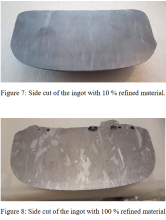
During production of silicon wafers out of silicon (Si) ingots and wafers, about 40–50% of the material is lost due to the cutting technique. The research had kerf from slurry based wafer cuttings undergoing several refining steps and being remelted into ingots for PV-application.
Conclusion: With 10% refined material, ingots were still directionally solidified, whereas with 100% refined material, they were not. The presented refining method does not allow for ingots with 100% refined material to be used as PV-material.
The project Recycling of broken Si based structures and solar cells is part of CABRISS, a European collaboration aimed to develop a circular economy mainly for the photovoltaic (PV), but also for other industries such as electronics or metallurgy.
The paper presents some tests in which broken solar cell structures coming from an early stage in the PV production process chain as well as broken finished solar cells have been recycled into new silicon (Si) feedstock through demetallisation, purification and directional solidification.
The paper explores two different routes to remove diffusion layers and anti-reflection coating (ARC) on broken cells. It also presents the characteristics of ingots produced with the Si-feedstock from the two routes by directional solidification.