The European Commission’s Directorate-General for the Environment is thrilled to announce the launch of the #WaterWiseEU campaign, and invites you to become a campaign partner.
CEwater International Conference 2024 will take place on 22-24 April on-site in Cracow, Poland. It will take stock of the waterCEmanagement in practice project and set out the challenges facing and methods for water and waste water management. It will also present organisational, technological, educational and information-oriented good practices for rolling out the circular economy in the water and waste water management sector.
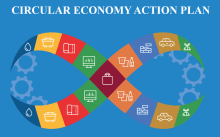
The Romanian Government has approved an Action Plan promoting the Circular Economy as part of the National Strategy for the Circular Economy (NSCE). The action plan sets out a national vision for speeding up the transition to a circular economy, with measures geared to the nine economic sectors with the greatest potential for circularity in Romania's economy: agriculture and forestry; automotive; construction; food and beverages; packaging; textiles; electrical and electronic equipment; waste; water; wastewater.
The action plan has a cross-sectoral strand including promotion activities and a monitoring platform. It also stipulates 52 priority measures scheduled to be rolled out between 2024 and 2032.
This conference (in Romanian) will take place in Cluj-Napoca (Romania) on 3 November (10:30 – 14.00 CET).
It aims to facilitate dialogue and the exchange of best practices at regional level on water and wastewater policy with a view to promoting sustainable water resource management, ensuring universal access to drinking water, public sewerage and wastewater treatment services, and implementing a specific circular economy action.
The 4th International Conference on Strategies toward Green Deal Implementation – Water, Raw Materials & Energy (ICGreenDeal2023) will take place on 14-15 December. It will tackle climate change and ways to prevent it, including innovative solutions (technological, environmental, economic and social) that can be implemented under the Green Deal Strategies.
Re-think Circular Economy Forum is an event designed to present a vision on macro-trends, possible evolutionary paths, and main projects concerning the Circular Economy on a local, national and international level. It wants to encourage the development of Circular Economy in Taranto and in the rest of Apulia territory.
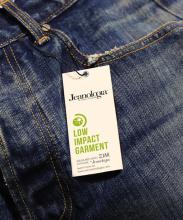
The Spanish company Jeanologia is currently spearheading the greatest challenge facing the textile industry: to achieve total dehydration and detoxification in denim industry. With Mission Zero the company is transforming the way jeans are made, from fabric to finish, minimising the use of water and chemicals to a close-to-zero target.
Eclaira is the regional collaborative platform dedicated to the circular economy in the French region Auvergne-Rhône-Alpes. Managed by CIRIDD, it aims to:
Shine a spotlight on initiatives carried out in the region
Encourage collaborative projects in the circular economy
Promote the implementation of the circular economy in the region
The platform enables users to stay abreast of circular trends and events, network, forge partnerships and join projects, use tools and tell other people what they have been doing.
It publishes technical reports and focuses on three areas: water, biodiversity and textiles, tackling each from the perspective of the circular economy. There is also a toolbox.
The World Circular Economy Forum 2023 will be held in Helsinki from 30 May to 2 June 2023. This global collaboration forum is co-organised by Finnish Innovation Fund Sitra and Nordic Innovation, with international partners. It will attract more than 2 000 leading circular economy players in the world to Finland to find circular solutions that can help our economies fit within the boundaries of nature. Part of the programme will also be accessible online.