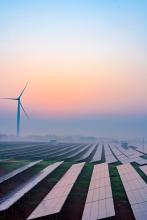
This Sitra memorandum focuses on providing building blocks to help the next European Commission address the ecological crisis while maintaining Europe's competitiveness and resilience.
The renewed European Commission will take office in 2024 and must keep up the European Green Deal, ensuring that it centres on nature and mainstreams the circular economy across the EU single market.
The key recommendations include:
ecosystem accounting
biodiversity offsets
circular single market
leveraging nature as a business opportunity
using data for the green transition
addressing Europe's global biodiversity footprint, and
reforming the common agricultural policy.
Stakeholders are encouraged to contribute to the ongoing debate, ensuring the strategy's success.
The Circular Economy Resource Information System (CE-RISE) is an EU-funded project aiming to optimise raw material reuse and recovery in electronic products.
CE-RISE seeks to create an information system and integrate digital product passports. It will provide stakeholders with a better understanding of the green credentials of electronic products.
The conference on Green PLM 2023 - We enable the shift to sustainability will feature presentations and discussions on data management and digital solutions for product carbon footprints, secondary material rates and circularity.
There is a fee to take part in this conference, which will be held in Berlin on 9 November 2023. The event will be partly in German and partly in English.
The Circular Economy Lab was set up in 2018 by Cariplo Factoryand Intesa Sanpaolo Innovation Center. It is a hub of circular economy competences that aims to help spread the principles and methods of the circular economy and support companies as they go circular.
The Lab is involved in various projects, such as the Iren Startup Award Call4Circular | Circular products and materials. It promotes the circular economy by holding workshops on key topics and by creating networking opportunities for innovative ecosystem players, such as startups, innovative SMEs, universities, research centres and technology transfer centres.
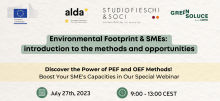
The European Commission is hosting a webinar on 27 July on the implementation of Product and Organisation Environmental Footprint methods. Find out about these methods, a tool for assessing, reporting and achieving circularity throughout the life cycle.
The Circular Republic Festival will take place from 15 to 18 November 2023. Join top circular economy visionaries for innovation, networking and inspiration. Showcase initiatives, meet relevant players and be inspired by good practices. Experience keynote speeches, panel discussions, workshops and online collaboration. We want to accelerate the circular economy together!
Kosovo, a potential EU candidate country, has embarked on an ambitious journey – the transition towards a circular economy. The aim of this journey is:
to preserve the country’s nature and rich biodiversity
to valorise its resources and talent,
to contribute to a more resilient and regenerative economy and a society where everyone has the opportunity to live a good life.
This roadmap by Kosovo's Ministry of Environment, Spatial Planning and Infrastructure identifies six priority areas: a) food and b) forestry systems, c) creative and d) retail sectors, e) built environment and the f) manufacturing sector.
Given the strong interdependency of these sectors, the Roadmap also introduces horizontal areas that enable and support priority areas and further promote circular transition.
Eclaira is the regional collaborative platform dedicated to the circular economy in the French region Auvergne-Rhône-Alpes. Managed by CIRIDD, it aims to:
Shine a spotlight on initiatives carried out in the region
Encourage collaborative projects in the circular economy
Promote the implementation of the circular economy in the region
The platform enables users to stay abreast of circular trends and events, network, forge partnerships and join projects, use tools and tell other people what they have been doing.
It publishes technical reports and focuses on three areas: water, biodiversity and textiles, tackling each from the perspective of the circular economy. There is also a toolbox.
ED is a digital label providing information about the product's packaging: its components, the materials it's made of, and how to dispose of them properly.
All you need to do is scan the QR code on the packaging to get real-time, geolocated and accurate information on how to dispose of it.