To evaluate the impact of adopting circular economy principles in cities – in terms of emissions, quality of life and resilience – Enel and ARUP, with the scientific support of the Enel Foundation, have collaborated on a research project focusing on four cities: Bogotá, Genoa, Glasgow and Milan, all committed to enhancing the energy transition.
The study concerns three key urban sectors:
mobility
built environment
energy systems.
It entailed interviews with stakeholders and analyses of existing decarbonisation policies and circular strategies. A reference model was used to help identify the most significant circular actions that could lead to a reduction in GHG emissions in three sectors.
The results could be used as a guide for decision makers.
Reduce water use in Diageo's operations with a 40% improvement in water use efficiency in water stressed areas and 30% improvement across the company.
Other (Sustainable management of water)
To be achieved by:
Replenish more water than Diageo uses for their operations for all their sites in water-stressed areas by 2026.
Other (Sustainable management of water)
To be achieved by:
Invest in 150 projects to improve access to clean water, sanitation, and hygiene (WASH) in communities near Diageo sites and local sourcing areas in all of Diageo's water-stressed markets.
Other (Sustainable management of water)
Start Date:
Engage in collective action in all of their Priority Water Basins to improve water accessibility, availability and quality and contribute to a net positive water impact.
Recycling (also including specific waste streams)
To be achieved by:
Achieve zero waste in Diageo's direct operations and zero waste to landfill in Diageo's supply chain.
Recycled materials as part of raw materials demand (recycled content)
To be achieved by:
Ensure 100% of Diageo's packaging is widely recyclable (or reusable/compostable).
Recycled materials as part of raw materials demand (recycled content)
To be achieved by:
Continue to reduce packaging and increase recycled content in Diageo's packaging (delivering a 10% reduction in packaging weight + increasing the % recycled content of the packaging to 60%).
Recycled materials as part of raw materials demand (recycled content)
To be achieved by:
Ensure 100% of Diageo's plastics are designed to be widely recyclable (or reusable/compostable) by 2025 and achieve 40% recycled content in Diageo's plastic bottles by 2025, and 100% by 2030.
Other (Sustainable agriculture management)
To be achieved by:
Provide all of Diageo's local sourcing communities with agricultural skills and resources, building economic and environmental resilience (supporting 150,000 smallholder farmers).
Other (Sustainable agriculture management)
To be achieved by:
Develop regenerative agriculture pilot programmes in 5 key sourcing landscapes.
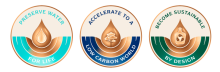
Other (Accelerate to a low carbon world)
To be achieved by:
Become Net Zero carbon in Diageo's direct operations.
Other (Accelerate to a low carbon world)
To be achieved by:
Reduce Diageo's value chain carbon emissions by 50%.
Other (Accelerate to a low carbon world)
To be achieved by:
Use 100% renewable electricity across all of Diageo's direct operations.
Renewable energy technologies, such as wind turbines, solar photovoltaic panels and batteries, are essential for Europe’s transition to climate neutrality. Deployment, maintenance and replacement of this infrastructure requires significant resources, including many substances included in the EU list of critical raw materials.
Waste arising from end-of-life clean energy infrastructure is projected to grow up to 30-fold over the next 10 years, presenting significant opportunities to reduce consumption of scarce raw materials by recycling metals and other valuable resources back into production systems.
Circular economy approaches such as repair and upgrading of equipment and recycling of end-of-life infrastructure can underpin the sustainability credentials of EU renewable energy.
By designing and enabling the use of Electric Vehicle (EV) batteries for multiple use-cycles, valuable materials are maintained, and a range of economic and environmental benefits can be unlocked.
Innovators from the automotive industry, Dutch and French public authorities, and the European Commission have collaborated to identify regulatory barriers to reusing EV batteries as energy storage devices and unlock solutions.
Pryme converts plastic waste into valuable products on an industrial scale. It has developed a new approach to an existing and proven chemical recycling technology. Pryme has optimised the pyrolysis process by adding proprietary characteristics.
Italy's Puglia Region has large expanses of olive groves. Pruning these trees yields around 800 kilotonnes of residual biomass each year and Fiusis uses this biomass to produce energy.
The Waste Transformers transforms organic (food) waste in an anaerobic digester called a Waste Transformer housed in 20-foot shipping containers into clean energy, water and high-grade fertiliser whilst also upcycling the waste into new raw materials for paper, textiles or soaps. They do this all on-site where the waste is produced. No transport, no CO2.