incommon is a non-profit organisation that encourages people to adopt the circular economy as a way of life. They use a bottom-up approach, working with individuals, schools, businesses, institutions, groups and local authorities.
Their approach ensures that people are informed about circular economy principles and engaged in implementing them, enabling them to make sustainable choices and drive local change.
Are you working on a topic related to the circular economy? Are you new to the circular economy but want to find out more? Then don't miss Circular Wallonia's Quinzaine de l’économie circulaire 2024 (Circular Economy Fortnight 2024)!
The European Sustainable Phosphorus Platform (ESPP) is organising a workshop on the legal status of biomass produced in wastewater treatment or with waste gas, manure or food waste inputs, to be used in fertilisers, feeds and industry.
The SCALE-UP project helps regional multi-actor partnerships identify and scale-up innovative, sustainable bio-based value chains that build on regional resources.
It aims to adapt, implement and evaluate tools to help regional actors overcome bottlenecks towards fully exploiting circular bioeconomy potential. In this way, it will promote regional, rural, local/urban and consumer-based transitions towards a sustainable, regenerative, inclusive and just circular economy and bioeconomy across all regions of Europe.
Join the first session of the B-Trust masterclass series on Unlocking Consumer Trust in Innovative Biotechnologies.
This session will explore how consumer trust affects biotech innovation in the agri-food and bio-based sectors. Gain insights into stakeholder engagement, risk communication and building public trust.
The Climate Change Summit (CCS), the largest event in Central and Eastern Europe (CEE) to focus on climate solutions, will bring together leaders in climate innovation, policy, entrepreneurship and government to discuss climate action and green economy opportunities.
Experts will work together to identify local and regional solutions for a sustainable future.
Stakeholders in the food waste reduction network REGAL Normandie will celebrate their 10th anniversary with plenary sessions and workshops looking at what has already been done to cut food waste and exploring what can be done to push on with this vital initiative.
On 5 September, ZeroW will be holding a workshop bringing together a diverse group of stakeholders, research institutions, startups, industry associations, regulatory authorities and more. They will discuss how to market innovative food loss and waste solutions produced during the research and development stage of EU projects.
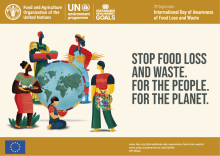
This year, the International Day of Awareness of Food Loss and Waste will be celebrated on 27 September. Get involved in the campaign by sharing free materials on digital channels and spread the word!