Nuova Sara oil separator centrifuges apply centrifugal force to separate shavings and metal waste. The de-oiled shavings can be recovered and valorised as secondary raw materials.
The EU-financed LEVEL-UP project offered circularity protocols and strategies for extending the remaining useful life of large industrial equipment and assets that can no longer remain competitive in the Industry 4.0 paradigm.
By 2025, all new PET bottling lines will be suitable for processing up to 100% high-quality rPET without compromising output quality, efficiency or effectiveness.
Other (Plastic-free secondary packaging)
To be achieved by:
By 2022, alternative secondary packaging solutions free of disposable plastics will be available for every established SKU format multipack.
Other (Advisory for recycling-friendly packaging design)
Start Date:
Krones will leverage its technological expertise to help customers design packaging that specifically facilitates post-consumer recycling.
Other (Upgrading from linear to circular economy)
Start Date:
Krones will assist its customers to adapt existing lines in order to achieve the best possible outcomes when using recycled or renewable input materials.
Other (Tethered caps)
Start Date:
With immediate effect, Krones will make available capping equipment for tethered caps.
Other (Sustainable labelling)
Start Date:
Krones makes it possible to use detachable labels to enhance recyclability. It aims to make labels jointly recyclable with containers or to eliminate separate labelling.
Other (Investing in recycling solutions)
Start Date:
Krones will continue to allocate substantial R&D resources to its recycling technology division in order to facilitate physical recycling of post-consumer plastics.
Other (Beyond PET packaging)
Start Date:
Krones will actively explore disruptive new technologies delivering beverages to consumers without conventional PET packaging (e.g. pulp bottles, no-packaging solutions).
The European Committee of Manufacturers of Electrical Machines and Power Electronics (CEMEP) supports the development towards a circular economy (CE), thus actively contributing to more sustainable manufacturing and responsible consumption. This industrial sector follows a business-to-business market model, delivering products for a wide number of economic sectors and applications.
Its three main product groups – electric motors, variable speed drives and uninterruptable power systems – show differences and similarities when it comes to material efficiency, hence the need for sector- or product-specific approaches when pursuing CE.
This position paper describes the CE status of the CEMEP industries and the way forward towards more circularity.
The CirQuality OWL plus project is funded by the EU (ERDF) and the Federal State North-Rhine Westfalia with the aim of fostering the circular economy in the area of Eastern Westfalen-Lippe (OWL).
Several regional partners from different fields (from energy to technologies to food to universities and associations) have teamed up to use the circular economy to get the region off the ground in an innovative, crisis-proof, resilient and sustainable way. Together, they organise events and strive to meet the following goals:
Qualification of future specialists and managers for the circular economy
Circular Supply Chain Management Solutions (SSCM)
Turnaround to circular thinking and economics in the building sector
Waste and circular economy of the future in the OWL region.
SCALER provides mechanisms to accelerate the journey towards efficient and quick implementation of industrial symbiosis in the European process industry. They do this by developing action plans and adapted solutions to industrial stakeholders and communities.
SCALER works closely with a wide range of stakeholders including industrial networks, consultancies, researchers and policy makers at various geographic and political levels, to deliver practical tools and guidelines for industry actors engaging in resource efficiency, reuse and sharing.
To achieve this goal, SCALER is developing a set of reports and guides. They offer insights into how businesses can start industrial resource synergies with other companies to minimise their waste and create more value from their production.
The Data Centre Industry (DCI) is one of the most important pillars of current technological and economic developments.
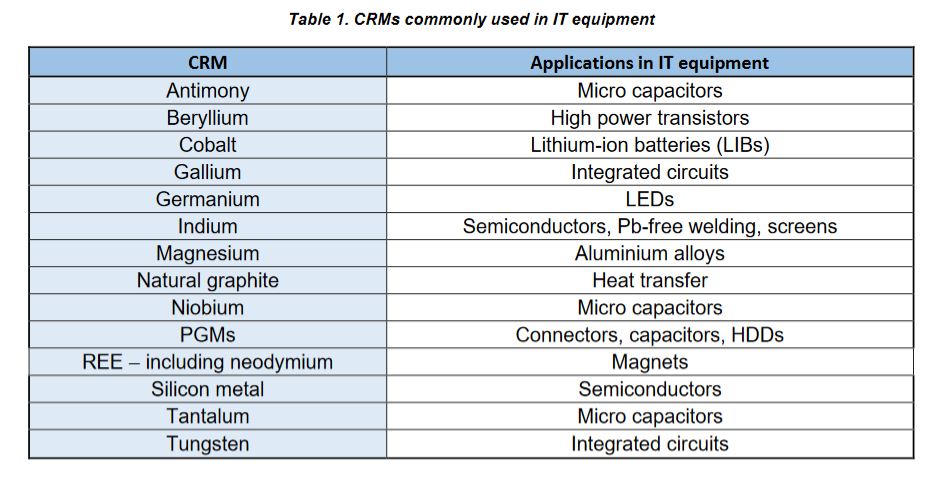
In DCIs, more than fifty different materials can be found per product, including ferrous, non-ferrous metals, precious metals (PM), platinum group metals (PGM), rare earth elements (REE), plastics and/or ceramics, some being considered as Critical Raw Materials (CRMs).
This assessment aims to study DCI design and material composition (specifically servers and switches), as well as to analyse their performance in a circular economy and provide recommendations for ecodesign guidelines.