Want to know how AI can help assess the environmental and climate impact of bio-based products?
At this second workshop in a series of two, the ARGONAUT project will be presenting its updated JASON tool. Focusing on bio-based industrial applications from Italy, find out about the Digital Bio-product Passport framework and how AI-driven assessment can evaluate products made from agricultural and agri-food by-products.
Want to know how AI can help assess the environmental and climate impact of bio-based products?
At this first workshop in a series of two, the ARGONAUT project will be presenting its updated JASON tool. Focusing on agri-food bio-products from Lithuania, find out about the Digital Bio-product Passport framework and how AI-driven life cycle assessment can support SMEs and policymakers.
Including circular criteria in a tender is one thing. Knowing whether your purchases deliver real circular impact is another. How can buyers measure what changes in practice and use those insights to make better purchasing decisions without overburdening suppliers?
Join this #EUCircularTalks to explore practical approaches to monitoring circular procurement.
The ATLAS Cluster (Advanced Technologies for Lightweight Aerostructures and Sustainability) brings together five Horizon Europe research projects working to accelerate the development of lighter, smarter and more sustainable aircraft. By connecting expertise in advanced composite materials, manufacturing technologies, digital engineering, certification and next-generation aircraft concepts, the cluster fosters collaboration and knowledge exchange to address shared challenges across the aerospace value chain.
The first episode of its new #FlightPaths webinar series will explore how aerospace can reduce its environmental footprint through sustainable design, recycled carbon fibre, recyclable composites, digital twins and smarter manufacturing.
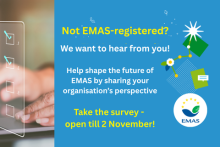
The EU Eco-Management and Audit Scheme (EMAS) is one of the EU's key tools for helping organisations become more circular and reduce their impact on the environment.
The European Commission has launched a survey to map how organisations approach sustainable management and how EMAS could become more relevant and accessible. Open until 2 November!
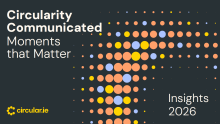
This report is part of the overarching project Circular.ie and was presented during the inaugural conference 'Circularity Communicated' in Dublin, on 30 September 2026.
It brings together insights from national public opinion research, behavioural research, campaign performance data and community-level activity to provide a comprehensive picture of public awareness, understanding and engagement with the circular economy in Ireland.
The report seeks to identify not only what the public knows about the circular economy, but also how awareness translates into understanding, trust, participation and behavioural change.
The New Circularity Index scheme is a verification framework.
It is designed to measure and certify the circularity performance of products throughout their lifecycle. It assesses materials, energy, water and waste, evaluating the share of circular materials, renewable energy, recycled water and waste sent for recycling compared with the total resources used in production.
Relevant, reliable information drives stronger circular policies – but it's not so easy to identify what information you need and what data will help you make the right decisions.
This webinar will explore practical approaches to circular economy monitoring.