Le secteur de l’événementiel est plus que jamais concerné par les enjeux de durabilité et de préservation des ressources. Conscients de la nécessité de concilier l’organisation d’événements et l’économie circulaire, les acteurs du secteur doivent se mobiliser davantage afin de mettre en œuvre les leviers d’action existants.
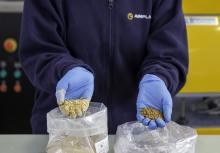
AIMPLAS, the Plastics Technology Centre, and OLIPE, Olivarera de los Pedroches, have carried out a project entitled GO-OLIVA, aimed at finding a high value-added application for olive stone waste by producing a new sustainable material for oil product packaging.
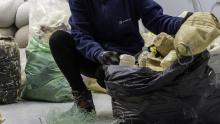
In the third year of the RepescaPlas project, chemical recycling will be used to turn marine litter into fuel for fishing boats. During the first two years of the RepescaPlas project, five tonnes of marine litter were recovered through mechanical recycling operations.
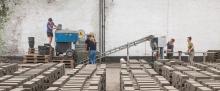
At its production site in Brussels, BC materials blends and transforms ordinary earth streams - what some consider to be waste - into perfectly circular building materials.
This case study is a part of the MBB LIFE+ Investing in Water project. APS Bank decided to invest in a holistic on-site water conservation programme. The aim of the programme was to put the bank’s sustainability policy into practice, reduce operational costs and help conserve scarce national resources.
The overall objective of the project is the "smart" exploitation of Petroleum Refinery Sludges (PRS) produced by the Refinery of Motor Oil Hellas in Corinth (Greece).
Citeo is a non-profit active in the field of Extended Producer Responsibility relating to paper and packaging. It works to reduce its environmental impact.
Under the Environmental code, producers and distributers are responsible for - and must pay the costs of – dealing with the waste generated by the packaging used by their products. Companies can transfer their responsibility in this area in exchange for paying to join Citeo. The funds thus collected are used to finance the collection, sorting, recycling and reuse of packaging.
Members also have access to support from Citeo's experts, enabling them to apply eco-design principles to paper and packaging, inform their customers about the products' environmental characteristics and plan for the impact of French and European regulations.
"Chambers for a Circular Economy - Actions to Support SMEs' Transition to a Circular Economy" aims to offer a clear overview of the wide range of initiatives led or co-managed by Eurochambers in the field of the Circular Economy, with the intention not only to inform and share innovative actions, but also to spur and motivate synergies, triggering collaborations and the creation of new business models. The aim of each and every of these projects is to enable businesses to evolve from a linear to a circular mode of production and consumption.
This publication presents a total of 32 projects initiated or co-led by Chambers in 13 countries, and categorized under 5 main topics:
The campaign “Be a Miljönär” [a pun which merges miljö (environment) with miljonär (millionaire)] has a long-term goal: reducing waste and making sustainable consumption a habit among people aged between 18 and 30.