BIOPYRANIA is an EU-funded project working on transforming second-generation biomass and woody residues into high-performance bio-based polymers for strategic industrial applications.
It is supporting Europe’s transition towards a circular, climate-neutral economy.
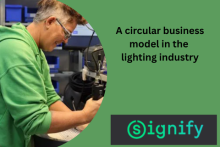
Signify Circle makes lighting products which are resource‑efficient and circular. It factors ecodesign, product-as-a-service, remanufacturing and repair into its business model.
Fibenol transforms forestry and wood industry residues into sustainable biomaterials used in the biomaterials and biofuels, packaging, construction, and food, feed and pharmaceuticals industries.
Waste To Resources Latvia - boosting regional sustainability and circularity is a Lifeproject which provides a framework for coordinating, testing and scaling up circular economy solutions at national level, involving multiple partners and thematic implementation areas.
So far, it has launched national digital platforms for reuse and industrial symbiosis, improved data availability and decision-support tools for the waste management sector, and enhanced quality assurance of secondary materials through an accredited polymer testing laboratory.
The COLLECTORS project (waste COLLECTiOn systems assessed and good pRacticeS identified) identified good practices in waste collection and sorting, focusing on paper and packaging, waste electrical and electronic equipment, and construction and demolition.
The Product Circularity Data Sheet (PCDS), now recognised as ISO 59040, provides a structured, machine-readable framework that enables manufacturers, suppliers and customers to exchange consistent and verifiable circularity data across value chains.
Coffee!UP has adopted a unique cascade recycling system for used coffee grounds which is in line with the zero waste concept. In this way, they support the circular economy and thus mitigate the impact on climate change.
Through this system, Coffee!UP obtains high-quality ingredients by gradually removing the valuable parts of coffee grounds. These are then used in the cosmetics industry and serve as an input material for making plastic products.
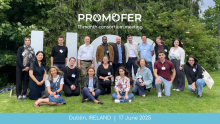
The PROMOFER project aims to use low value feedstock (straw, industrial wastewater and starch, mostly) to manufacture valuable biobased compounds. Specifically, it will improve the fermentation processes and downstream purification, solve bottlenecks upstream and downstream, and produce high-value applications.
CirkArena is an R&D centre for the circular economy. Focusing on waste, it aims to help transform the local ecosystem and answer people's questions on the plastics value chain.
Developing sustainable materials and utilizing recycled feedstock in material manufacturing requires a lot of laboratory testing to ensure that the new material meets functionality and safety standards. Measurlabs performs these tests!