This report from the HOOP Project describes the methodological approach for identifying circular business models for bio-waste.
It presents an analysis of the business models behind 15 successful solutions for bio-waste valorisation and proposes a template business canvas for bio-waste valorisation. The report also presents a new integrated circular business model typology focused on bio-waste, along with drivers and barriers related to the implementation of circular business models in bio-waste valorisation.
HOOP's Investment Package Manual was developed using a three-step approach and the public version has been distributed in three volumes.
Volume III presents a selection and inventory of funding and financing schemes, programmes, instruments and tools for investment projects on circular bioeconomy and bioenergy at national and regional levels. It provides case studies from eight European countries: Finland, Greece, Germany, Italy, Norway, Portugal, Spain and The Netherlands.
HOOP's Investment Package Manual was developed using a three-step approach and the public version has been distributed in three volumes.
Volume II guides the reader through the selection and inventory of funding and financing schemes, programmes, instruments and tools for investment projects on circular bioeconomy and bioenergy at European level.
HOOP's Investment Package Manual was developed using a three-step approach and the public version has been distributed in three volumes.
Volume I describes the EU Taxonomy concepts as applied to economic activities linked to circular bioeconomy technologies, processes, activities and bioproducts from biowaste and wastewater sludge feedstocks.
The 70th session of the United Nations Economic Commission for Europe (UNECE) will take place in Geneva on 18-19 April 2023. The Commission is UNECE's highest decision-making body, and in this session it will take stock of its work to promote a circular economy and the sustainable use of natural resources, among other issues.
On 1 December 2022, Commissioner Mariya Gabriel launched the largest public consultation ever held on the past, present and future of the Horizon Framework Programmes 2014-2027.
The consultation will be open until 23 February 2023.
The World Circular Economy Forum 2023 will be held in Helsinki from 30 May to 2 June 2023. This global collaboration forum is co-organised by Finnish Innovation Fund Sitra and Nordic Innovation, with international partners. It will attract more than 2 000 leading circular economy players in the world to Finland to find circular solutions that can help our economies fit within the boundaries of nature. Part of the programme will also be accessible online.
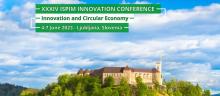
The ISPIM Innovation Conference 2023, “Innovation and Circular Economy”, is an event on 4-7 June 2023 that brings world-renowned experts on innovation management together in Ljubljana, Slovenia.
The innovation cluster Circular Saxony aims to re-design products and processes in line with circularity and sustainability, while lowering the costs of society's transformation towards climate neutrality.
It brings together industry, research and policy representatives in thematic working groups which will work on practical solutions within the region of Saxony.
Goals:
Foster collaboration across sectors and technologies among SMEs, large enterprises, research organisations, associations and policymakers in Saxony
Transfer knowledge
Facilitate projects for members
Set up pilot lines and digital networking technology
Increase quota of materials kept in the loop for all relevant materials
The European Cluster Collaboration Platform (ECCP) is an online hub.
It aims to strengthen the competitiveness and sustainability of Europe’s industrial ecosystems, particularly SMEs, improving their performance in terms of productivity, innovation, internationalisation and resource efficiency through a variety of modern tools:
Events to foster capacity building and peer discussions
Matchmaking events
A knowledge database mapping regional, national, international and sectoral cluster networks, toolkits and publications
Partner search and exchange facilities to link up offer and demand
Support for international cooperation
Their Green Transition Support Hub, with a network of institutions offering support for resource and energy efficiency, addresses circularity.