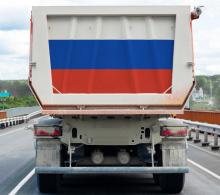
One major issue at the moment is making the EU less reliant on Russia.
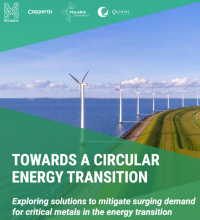
This paper from the CEPS Think thank provides insights on Russia’s share among EU sources of key supplies for low-carbon technologies. It looks at prospects for meeting future material demands through circularity for three technologies: lithium-ion batteries, wind turbines and fuel cell electric vehicles.
Russia is among the larger suppliers of raw materials to the EU. It is the biggest world supplier for palladium, platinum and nickel, and a prominent one for aluminium and copper. The country still holds large untapped reserves of rare-earth elements.
This paper provides an overview of EU import dependency on raw materials and Russia’s share among EU sources of key supplies for low-carbon technologies. It then looks at prospects for meeting future material demands through circularity for three technologies, namely lithium-ion batteries, wind turbines and fuel cell electric vehicles.
The analysis is based on two scenarios with different levels of ambition. They aim to give an indication of the scale of potential benefits that can be achieved through circular approaches.
Concern continues to grow regarding the availability of critical metals. Such rare or scarce metals, like lithium or cobalt, are not only vital to the world’s major economies. They are also crucial for a transition to a renewable energy system in the Netherlands. At current levels, the global supply of these metals is insufficient, and the Dutch demand for them is no exception.
This study Towards A Circular Energy Transition serves to provide insight into the demand for critical metals domestically over the next few decades, to offer perspectives on how to reduce this demand, and to demonstrate the opportunities these new measures present to industry in the Netherlands.
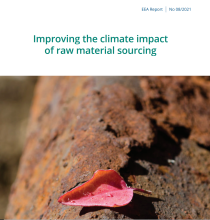
The extraction/processing of raw materials is associated with potentially significant environmental impacts, including contributing to approximately half of the greenhouse gas (GHG) emissions globally. In the EU, non-energy, non-agricultural raw materials account for 18% of GHG emissions associated with EU consumption.
Given the EU's commitment to reducing its GHG emissions, and the European Green Deal's aspiration to achieve a climate-neutral continent by 2050, mitigating climate impacts from raw material production is central to the EU's climate agenda.
All activities associated with collecting waste materials for recycling lead to GHG emissions. Especially for metals, however, their contribution to emissions is only a fraction of the emissions saved by not using primary metals.
This model reinforces Wallonia's objective of renewing its industry and will ensure that the region is better able to cope with future crises.
The strategy will achieve this by fully integrating the alterations and adaptations required by climate change, and by making Wallonia more independent in terms of resources and global supply chains.
Wallonia’s vision is based on the following guidelines:
Moving towards a carbon-neutral economy;
Moving towards a resilient and inclusive economy;
Stimulating innovation as a catalyst with emphasis on the digital transition and nature-based solutions.
Particular attention is paid to the six value chains: Construction, Plastics, Food, Water, Textiles and Metallurgy.