At the beginning of June 2020 the Spanish Government published España Circular 2030, the new Strategy for Circular Economy in Spain until 2030. It contains circular economy objectives and a series of strategic orientations for the period 2020-2030.
The strategy:
sets up a series of objectives for 2020-2030 which will, inter alia, allow a 30% reduction in the national consumption of resources and a 15% reduction in waste generation (as compared to 2010);
contributes to Spain's efforts to transition to a sustainable, decarbonized, resource-efficient and competitive economy;
takes the form of successive three-year action plans providing for concrete measures to deliver on circular economy.
Syctom is a French local public authority and a leading European operator in domestic waste management. It processes 2,3 million tonnes of domestic and related waste from around six million inhabitants of the Île-de-France region, including Paris, i.e. almost 9% of the French population.
In its position paper, Syctom highlights some elements in order to contribute to future discussions about the development of the new CEAP, in particular:
strengthening and extending ecodesign,
waste reduction,
stimulating the market for secondary raw materials,
waste-to-energy as a sustainable environmental activity and
SCALER provides mechanisms to accelerate the journey towards efficient and quick implementation of industrial symbiosis in the European process industry. They do this by developing action plans and adapted solutions to industrial stakeholders and communities.
SCALER works closely with a wide range of stakeholders including industrial networks, consultancies, researchers and policy makers at various geographic and political levels, to deliver practical tools and guidelines for industry actors engaging in resource efficiency, reuse and sharing.
To achieve this goal, SCALER is developing a set of reports and guides. They offer insights into how businesses can start industrial resource synergies with other companies to minimise their waste and create more value from their production.
Circular economy (CE) appears everywhere in Europe to be an adequate response to the challenges of resource scarcity. Driven by the development of the European CE Package, many initiatives to accelerate the transition are emerging, both on governmental and private levels, but they lack coordination.
In the wake of the new Circular Economy Action Plan published by the European Commission in March, the "Institut National de l'Economie Circulaire" (INEC) - member of the ECESP Coordination Group - and Orée have co-authored a study identifying the major CE networks in Europe in order to strengthen the cooperation needed to achieve CE ambitions. By so doing they have pursued their common aim to develop and disseminate a vision of an inclusive and unifying CE.
How can sustainable consumption and longer lifetime of products be promoted through consumer protection legislation?
This in-depth analysis investigates the contribution, or lack of contribution, of the current EU consumer protection legislation to sustainable consumption and longer lifetime of products. In addition, it gives an overview of the most relevant best practices at national and international level and provides recommendations on the future development and possible reforms of European consumer protection legislation with a view to more sustainable consumption and longer lifetime of products.
This study was commissioned by the European Parliament Committee on Internal Market and Consumer Protection (IMCO).
The fashion industry has a big influence on the global economy and is known for its social and environmental impact. This online course by Wageningen University & Research is an introduction to circular fashion, brought by 30 experts from academia and practice.
After this course, you will be able to:
Understand the role of sustainability and circularity in fashion
Understand the importance of design for disassembly and recycling
Evaluate new biobased materials for textiles and understand the change in production processes
Disrupt current thinking and mindset in the industry and manage the transition to circular fashion
Understand economic paradigms and new forms of value creation for circularity in the fashion industry
This review paper of Mark Anthony Camilleri examines relevant regulatory guidelines, policies, and recommendations on sustainable development, where it traces the origins of circular economy (CE). It goes on to shed light on key theoretical underpinnings of CE's closed loop and product service systems.
The findings suggest that the CE's regenerative systems minimise the environmental impact as practitioners reduce their externalities, including waste, emissions, and energy leakages through the use and reuse of resources. Therefore, this contribution offers a critique on CE's inherent limitations and discusses about the implications of having regulatory interventions that are intended to encourage responsible consumption and production behaviours.
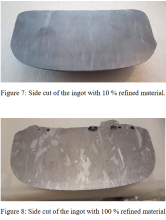
Research on Remelting and Purification of Si-kerf for PV wafers is part of CABRISS, a European collaboration aimed to develop a circular economy mainly for the photovoltaic but also other industries such as electronics or metallurgy.
During production of silicon wafers out of silicon (Si) ingots and wafers, about 40–50% of the material is lost due to the cutting technique. The research had kerf from slurry based wafer cuttings undergoing several refining steps and being remelted into ingots for PV-application.
Conclusion: With 10% refined material, ingots were still directionally solidified, whereas with 100% refined material, they were not. The presented refining method does not allow for ingots with 100% refined material to be used as PV-material.
This retrospective report is a review of the plans set out by Circular Flanders in the Kick-off Statement.
The most important finding? A good deal more was accomplished than initially anticipated. For example, the opportunity to launch three Open Calls, permitting the funding of over 130 innovative circular economy projects. The Green Deal on Circular Construction was also an unprecedented opportunity, as was the complementary reinforcement of the OVAM team of experts in ecodesign and area-specific operations, allowing the scope to expand.
This retrospective report is an interactive PDF. External links to downloads or online resources have been embedded on each project page for easy accessibility.