The 4th International Conference on Strategies toward Green Deal Implementation – Water, Raw Materials & Energy (ICGreenDeal2023) will take place on 14-15 December. It will tackle climate change and ways to prevent it, including innovative solutions (technological, environmental, economic and social) that can be implemented under the Green Deal Strategies.
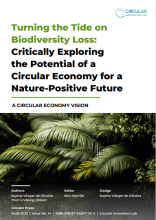
Global biodiversity is being lost at an unprecedented rate, giving rise to a sixth mass extinction and constituting one of the core challenges of the triple planetary crisis. Biodiversity forms the foundation of life on Earth and its loss presents a systemic risk to future human survival. To reverse the biodiversity crisis, transformative systems-wide change is required.
This paper addresses an existing research gap by exploring whether the circular economy can play a role not only in halting biodiversity loss but also in regenerating it and thereby contributing to a nature-positive future. To unlock the regenerative potential of the circular economy, a coherent strategy is needed that provides incentives for all actors, notably policymakers and businesses.
This Sitra memorandum focuses on providing building blocks to help the next European Commission address the ecological crisis while maintaining Europe's competitiveness and resilience.
The renewed European Commission will take office in 2024 and must keep up the European Green Deal, ensuring that it centres on nature and mainstreams the circular economy across the EU single market.
The key recommendations include:
ecosystem accounting
biodiversity offsets
circular single market
leveraging nature as a business opportunity
using data for the green transition
addressing Europe's global biodiversity footprint, and
reforming the common agricultural policy.
Stakeholders are encouraged to contribute to the ongoing debate, ensuring the strategy's success.
The GO-GRASS project is organising a partner event on 8 June, during EU Green Week 2023. It will explore new circular business models and skills that can enhance the resilience of rural communities, focusing on green biorefineries, funding instruments and good practices in the context of grassland opportunities.
The World Circular Economy Forum 2023 will be held in Helsinki from 30 May to 2 June 2023. This global collaboration forum is co-organised by Finnish Innovation Fund Sitra and Nordic Innovation, with international partners. It will attract more than 2 000 leading circular economy players in the world to Finland to find circular solutions that can help our economies fit within the boundaries of nature. Part of the programme will also be accessible online.
The Circular Navarre Catalogue 2022 is an update of the showcasing booklet published in 2020 and in 2021. This new edition includes 50 organisations - based on circular business models - in the Spanish Navarre region, looking for international cooperation.
The World Circular Economy Forum 2022 presents circular economy game-changers. Hosted in Kigali and online on 6-8 December 2022, WCEF2022 is co-organised by the African Circular Economy Alliance, the Republic of Rwanda, the African Circular Economy Network (ACEN) and The Finnish Innovation Fund Sitra, with international partners. The title for this year's event is 'From Africa to the World'.
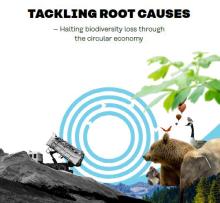
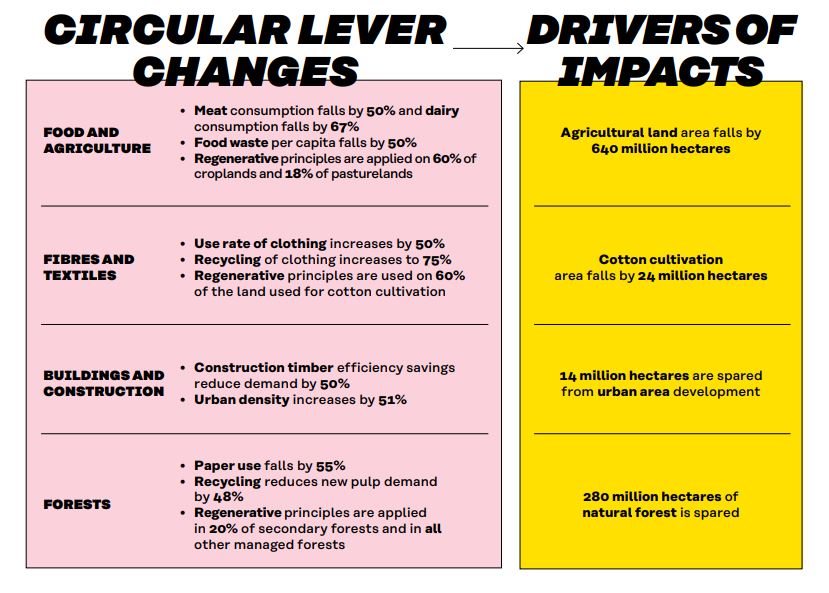
Circular economy interventions in four key sectors can halt global biodiversity loss and help the world's biodiversity recover, finds this study.
Tackling root causes - Halting biodiversity loss through the circular economy, written by experts from Sitra and Vivid Economics, is the first to quantify the role a circular economy can play in tackling global biodiversity loss, targeting the four sectors with the largest impacts:
food and agriculture
construction
textiles
forest and forestry
Circular interventions in these sectors can halt biodiversity loss even if no other action is taken. And more than that, the study finds that the world’s biodiversity can recover to 2000 levels by 2035, if the circular interventions are implemented.
Urban agriculture comes with its own share of environmental impacts. Circular strategies promise to reduce these impacts, but not all strategies are resource efficient and environmentally effective.
This paper finds that the most eco-friendly and circular strategies for urban agriculture, taking a Mediterranean tomato crop as a case study, include:
Struvite (phosphate mineral recovered from wastewater treatment) instead of non-renewable phosphate fertiliser to conserve freshwater
Recycled steel and materials for urban agricultural infrastructure to reduce carbon emissions, toxicity and freshwater pollution
Closed-loop irrigation to minimise ocean and freshwater pollution. However, if new infrastructure is required, it could lead to an increase in carbon emissions.
Agroamb Prodalt SL is a rural SME working in the primary sector. It provides agricultural services for farmers and organic fertilisers from biodegradable waste generated in the primary and agri-food sectors. Its process sanitises biodegradable waste and animal by-products with lime and produces organic fertilisers (turning these waste materials into resources).