The European Commission is calling on European cities committed to sustainability to apply for the 2026 European Green Capital and Green Leaf Awards. The call for applications is open until 30 April 2024.
Climate Action Week for Fashion & Apparel will take place on 18 to 22 March, organised by the Scandinavian Textile Initiative for Climate Action (STICA).
Linked to the BATRAW project that develops circular approaches for electric vehicle batteries, this CEPS report delves into the new EU regulatory framework for batteries and the expanding EU digital product passport landscape. It identifies key opportunities and challenges for battery passports based on data collected from companies at different stages of the battery value chain.
The data suggest that the battery passport can help break down information silos among supply chain actors and support recycling and reuse. It also provides opportunities for increasing transparency about carbon footprint impacts across battery supply chains, while creating a level playing field with horizontal requirements for all supply chain actors.
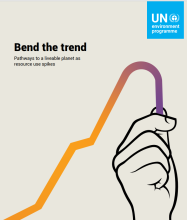
The 2024 edition of the Global Resources Outlook, from the International Resource Panel, shows that it is both possible and profitable to decouple economic growth from environmental impacts and resource use. It sheds light on how resources are essential to the effective implementation of the Agenda 2030 and multilateral environmental agreements to tackle the triple planetary crisis.
It is to be noted that the circular models to be followed are not just about recycling, but about keeping materials in use for as long as possible, and rethinking how goods as well as services are designed and delivered, thereby creating new business models.
The report also describes the potential to turn negative trends around and put humanity on a trajectory towards sustainability.
With this Sustainable Leaders Conference on 15 May 2024 in Dublin, Free ICT wants to take executives on a journey helping stakeholders meet the challenges and opportunities of the ICT aftermarket, crucial for the circular economy.
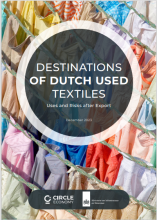
Used clothing exports from the Netherlands totalled more than €193 million in 2022: not an insignificant amount.
Understanding the realities of second-hand clothing markets in export destinations will be crucial to develop appropriate policy at national and supranational levels. The aim is to support the socially equitable and environmentally sustainable processing of used textiles, and ensure that this industry is in line with the EU's 2020 Circular Economy Action Plan and the European Green Deal.
To this end, the report explores what happens to textiles collected in the Netherlands in their various destination countries, and highlights the impacts and risks associated with these exports, as well as how they are addressed.
The European Green Deal is a cornerstone of efforts to achieve climate neutrality by 2050 and deliver the Sustainable Development Goals in the EU. Many policy targets are dependent on action by local and regional authorities.
The current Commission's mandate is coming to an end, and so this is a good time to kick-start discussion on the "future" Green Deal and the role of local and regional authorities in implementing it.
The European Commission’s Joint Research Centre is therefore launching a stakeholder consultation for urban policy experts and policy makers, in order to get a better understanding of policy and target priorities for EU cities.
Changes in consumption behaviours and dominant lifestyles are increasingly recognised among the critical levers for the transition to a circular economy. At the same time, public engagement still needs improvement in some areas, and people's role in the process is largely overlooked.
Join us on 8 May (10:30-12:00 CEST)for an #EUCircularTalks event. Panellists will discuss key evidence about what works best to achieve circular engagement and advance the circular behaviours that make a difference in Europe. The event will be the final rendez-vous of the series of podcasts.
Following a request by the Belgian Presidency of the Council of the European Union, the European Committee of the Regions is preparing an opinion on What is the role of local and regional authorities in the transition towards a circular economy? The opinion is being drawn up by Loredana Capone, president of Apulia Regional Council (Italy).
This stakeholder consultationis intended to provide Ms Capone with input for the opinion.
The BRINC(Brokering cross-border Innovation through Clusters) project is holding a workshop where participants will be able to meet the BRINC network of public authorities and other key actors working on public procurement of innovation and circular economy in order to exchange insights and learn from each other.