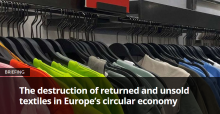
EU policymakers recently decided to introduce a direct ban on the destruction of textiles and footwear, with some exemptions for small, micro and medium-sized companies.
In this briefing, the EEA takes stock of what is currently known about the volumes and destruction of returned and unsold textiles in Europe. The growth of online shopping, flexible return practices, changed consumer preferences and fast-fashion business strategies in Europe have resulted in increased shares of returned and unsold textiles.
Over the past years, fast fashion and luxury brands have been reported as destroying returned or unsold clothing, shoes and other textiles. Textile product destruction is a very good example of a ‘take-make-waste’ approach.
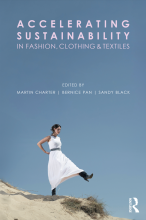
This workshop will present, highlight and discuss the state of play and future issues related to sustainability in the fashion, clothing and textiles sector. It will also launch the book on Accelerating Sustainability in Fashion, Clothing and Textiles, withpresentations from the editors and contributors.
There will be roundtable discussions covering key topics highlighted in the book (such as the circular economy, innovation and new business models, design and materials) and networking opportunities.
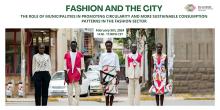
This online event of the UN Fashion Alliance on 5 February 2024 will discuss the role of municipalities in promoting circularity and more sustainable consumption patterns in the fashion sector.
ASK - The Nordic Way is a Nordic region-based podcast exploring sustainability and circularity. Each episode tackles a different aspect: have a listen!
CircularInvest and DEFINITE-CCRI are launching the Circular Investment Readiness Network, a Europe-wide community of practice to help circular economy projects overcome development and funding challenges.
The initiative will officially kick off online on 21 November, from 10:00 to 12:00 CET.
Fast fashion and disposing of clothes at the end of their lives are generally considered to be the main issues in terms of textile waste. However, pre-consumer waste is another major problem. This occurs a few steps further back in the manufacturing process, and deals with all waste materials created in the supply chain when a product is being made.
Unlike post-consumer waste, it is easier to keep pre-consumer waste away from a landfill or an incinerator as the fabric or garment is essentially brand new, despite one or more repairable defects.
So, finding ways to re-use or use up the resources created is the key to creating an endless supply of materials without further depleting natural resources.
This book collates leading-edge research and industry best practice to provide a ‘one-stop shop’ exploring the complex and interconnected issues surrounding sustainability in the sector.
It includes innovative examples from different regions, addressing topics from policies to supply chain issues and materials innovation. Five unique case studies of sustainable businesses provide examples of pioneering practice. The book brings together both academic and industry perspectives on the critical areas that require immediate action to move towards a more sustainable fashion, clothing and textile sector.
Part VI features five chapters by leading authors covering the circular economy in the sector, including a chapter by Professor Jacqueline Cramer.
Circular Week, an international series of events dedicated to sustainable development and the circular economy, will take place this year from 23 to 29 October.
Look through the full agenda of events and sign up!
Global biodiversity is being lost at an unprecedented rate, giving rise to a sixth mass extinction and constituting one of the core challenges of the triple planetary crisis. Biodiversity forms the foundation of life on Earth and its loss presents a systemic risk to future human survival. To reverse the biodiversity crisis, transformative systems-wide change is required.
This paper addresses an existing research gap by exploring whether the circular economy can play a role not only in halting biodiversity loss but also in regenerating it and thereby contributing to a nature-positive future. To unlock the regenerative potential of the circular economy, a coherent strategy is needed that provides incentives for all actors, notably policymakers and businesses.
Knof is a Slovenian social enterprise with a focus on circularity and sustainability. It operates reuse boutiques, a circular laboratory and a programme for individuals and entrepreneurs supporting sustainable companies.