Europe's circular economy transition is changing what is expected from goods, services and businesses: products need to be more resource-efficient and consumers need reliable information.
The new Directive on Empowering Consumers for the Green Transition will introduce stricter criteria governing sustainability marketing practices as from 27 September 2026.
This webinar will clarify the implications of these new anti-greenwashing provisions for moulded fibre products and outline strategies for remaining competitive while ensuring full compliance with the revised legislation.
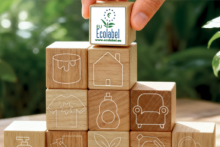
Europe’s flagship environmental label is doing better than ever, with the latest figures underscoring its growing role in steering the market towards more sustainable choices.
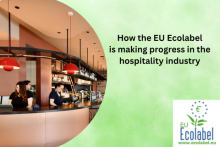
The hospitality market is shaped by rising environmental awareness and changing guest expectations, meaning that sustainability is a business imperative. The Accor Group, a hospitality group with over 5800 hotels in 110+ countries, has decided to focus on earning the EU Ecolabel.
The Ibis Styles and Ibis Budget Brest Centre Port in France is its flagship venture in this area and an example of how a hotel can reduce consumption and increase efficiency.
Cradle to Cradle®️ has always used detailed and verified information on material lifecycles and circular flows. What's changing now is how those data can be used by digital tools and artificial intelligence.
Find out why a trustworthy certification scheme is so important for users being steered by AI tools.
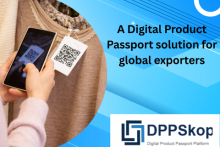
DPPSkop is a comprehensive B2B SaaS platform developed to meet the Digital Product Passport (DPP) requirements mandated under the EU’s Ecodesign for Sustainable Products Regulation.
The platform enables manufacturers, particularly in high-impact sectors such as textiles, batteries and electronics, to digitise, manage and share the lifecycle data of their products.
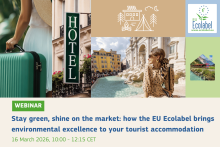
This webinar will explain how the EU Ecolabel for tourist accommodation services guarantees environmental excellence, enhances visibility to consumers and guarantees compliance with new and forthcoming EU legislation on sustainability labels.
Find out how it can make these services more competitive!
A new EU-funded project has been launched to develop a deposit-return system for used textiles across Europe. Known as TexMat, the initiative will reward consumers for returning reusable and recyclable items, while notifying producers when discarded textiles require waste management.
The EU Food Loss and Waste Prevention Hub is a one-stop-shop for stakeholders active in the area of food loss and waste prevention and reduction, across the EU and beyond. It's a source of information on what's going on in this community!