The World Circular Economy Forum 2023 will be held in Helsinki from 30 May to 2 June 2023. This global collaboration forum is co-organised by Finnish Innovation Fund Sitra and Nordic Innovation, with international partners. It will attract more than 2 000 leading circular economy players in the world to Finland to find circular solutions that can help our economies fit within the boundaries of nature. Part of the programme will also be accessible online.
Circular Buildings: constructing a sustainable future is the latest addition to a series of publications from Holland Circular Hotspot about circular challenges and opportunities in different sectors including infrastructure, plastics, manufacturing and textiles and apparel industries.
It explores how circular economy concepts can help tackle challenges in the building sector, supporting the transition towards a more sustainable and futureproof industry. It provides 25 good practices from the construction value chain and offers a framework for an international shift towards circular construction comprising policies, measurement standards, collaboration initiatives and knowledge exchange.
WaVa - Co-products Marketplace is a chemical exchange platform where professionals can sell their manufacturing co-products or buy raw materials. It matches up supply and demand.
Any industrial raw material, waste, by-product or manufacturing co-product can be traded on the WaVa platform, but its chief focus is managing and processing chemical by-products. It aims to help people achieve their circular economy objectives and thus reap the economic and environmental benefits.
WaVa is not recognised as a waste disposal facility; it simply connects buyers and sellers. It never actually takes ownership of the product.
This workshop brought together experts from various organisations to discuss topics like the undervalued importance of infrastructure in tackling climate change, discuss the markets for secondary resources, the relevance of deconstruction design to enable the renovation wave, and stress value-chains collaboration.
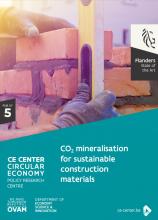
The production of Portland cement (PC) is responsible for 8-10 % of the global anthropogenic CO2 emissions. PC and PC-based blends are the most common binder in concrete production (< 99 % of cases). As PC is accountable for 74-81% of the CO2 footprint, substantial climate impact reductions for concrete requires eco-innovation at the cement level.
One of the most promising technologies to lower CO2 emissions consists in partially replacing traditional PC with industrial byproducts displaying cementitious properties, such as blast furnace slag from iron production, or coal combustion fly ashes from power generation, but their availability and properties are rather constrained.
A diversification of local (secondary) raw materials to extend partial substitution of PC is ongoing.
The sixth EU Raw Materials Week will take place from 15 to 19 November 2021, bringing together stakeholders to discuss policies and initiatives in the field of raw materials.
During the online event on Bio-based solutions for the green and digital transition on 16 November, you will learn how to upcycle woody biomass residues into valuable and innovative products.
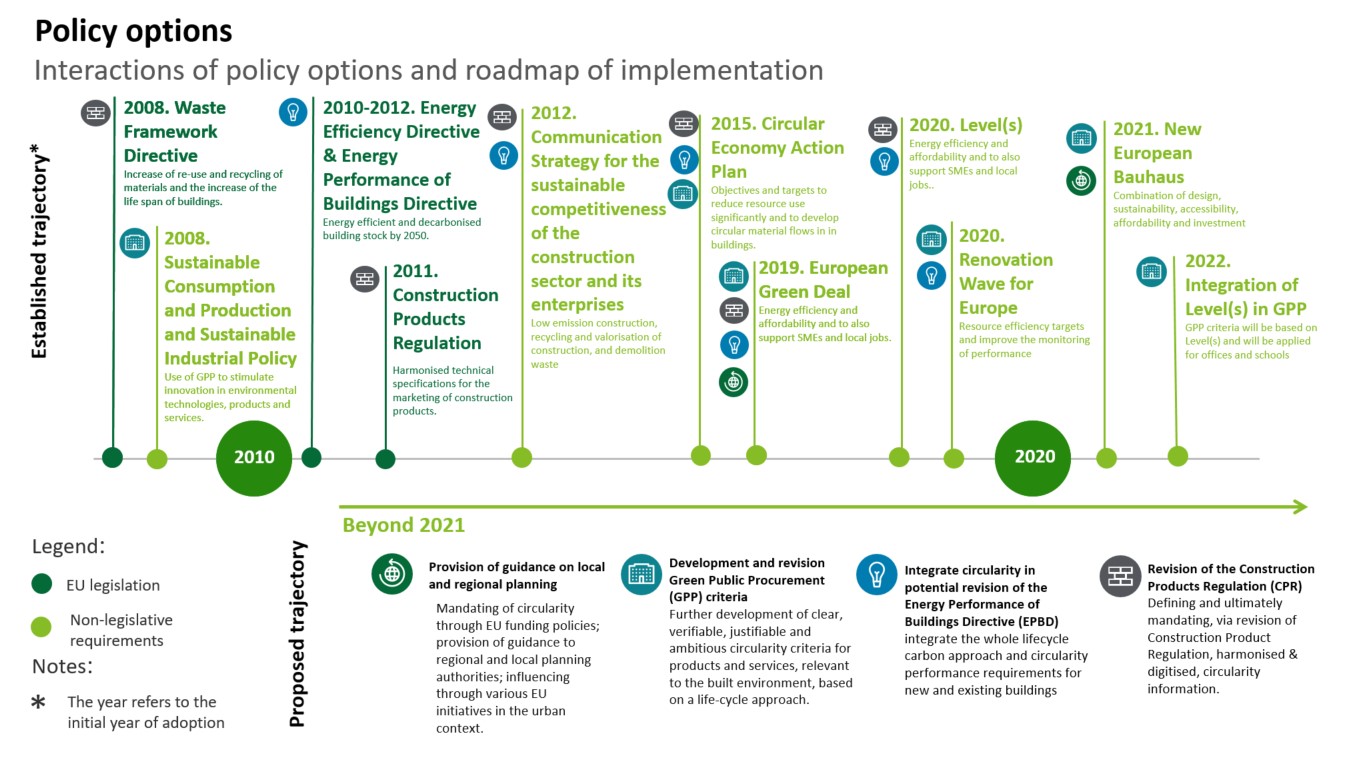
This study aims to assist the European Commission to identify policy options that support the uptake of circular economy principles for buildings’ design in European, national and local policies.
The goal is:
to increase the service life of buildings
to facilitate the use of secondary materials and
to improve resource efficiency across the building life cycle.
The study also provides key insights and recommendations on actions for a roadmap supporting the uptake and implementation of circular economy principles for buildings’ design.