The 8th World Circular Economy Forum hits Brussels from 15 to 18 April 2024 to turn circular visions into actions. The world’s leading event for circular economy thinkers, doers and leaders will showcase the most impactful circular solutions from Europe and around the world. Online participation is open to everyone.
The online national Register of Electronic Equipment Repairers (Nationaal Reparateursregister) has been launched in the Netherlands. It enables consumers and (retail) professionals to find professional and skilled independent repairers and refurbishers of electronic equipment who work nearby.
The Nordic Working Group for Circular Economy is a working group under the auspices of the Nordic Council of Ministers. NCE's mandate includes contributing to activities and exchanges of information that will promote the transition to acircular economy in the Nordic Region.
NCE also wishes to influence the EU and global actors, for example by helping to identify solutions that will reduce consumption of raw materials, waste, emissions and energy by recycling products, including for new purposes.
NCE carries out projects on different topics related to the circular economy.
With 14 automotive brands around the globe, Stellantis is a major industry player. In March 2022, it presented its Dare Forward 2030 strategic plan, aiming to achieve carbon net zero by 2038 while reducing its consumption of natural resources. The plan is steered by the Circular Economy Business Unit and is based on remanufacture, repair, reuse and recycle.
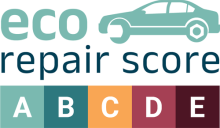
Eco Repair Score NV and VITO have developed the Eco Repair Score® to assess the environmental impact of a specific car repair job. It does this using a single score, with categories from A to E and associated colour coding.
VAIVÉN 2023: Circular Economy Festival is a meeting and exchange space of the Circular Economy Coalition for Latin America and the Caribbean that seeks to promote and celebrate the development of the circular economy in the region.
Circular Week, an international series of events dedicated to sustainable development and the circular economy, will take place this year from 23 to 29 October.
Look through the full agenda of events and sign up!
Selling or buying reconditioned items? Learn what the process involves in France!
To be recognised as reconditioned in France, an item has to follow a series of compulsory steps.
Sellers must be fully transparent about the source(s) of the product they are selling, reconditioning must take place on the premises where the product is sold or very close by. The product warranty must be extended to two years. Reconditioners should preferably use green transport and must be aware of their Extended Producer Responsibility and provide recycling bins for batteries, electrical appliances, etc. The original packaging should be preferably be used for packing the reconditioned goods.
These are just some of the rules that must be abided by in order to sell reconditioned items in France.
Knof is a Slovenian social enterprise with a focus on circularity and sustainability. It operates reuse boutiques, a circular laboratory and a programme for individuals and entrepreneurs supporting sustainable companies.
Do you know any outstanding organisations dedicated to awareness raising and citizen engagement on the circular economy? As CE experts and members of the circular community, you are invited to share links and insights into these Centres of Excellence via a survey which is being carried out by the Citizens Engagement and Behaviour Change Leadership Group.