The Commission has opened a public consultation on the review of the Directive on the end-of-life vehicles (ELV). It is targeted especially at two stakeholder groups: 1) citizens with a general interest in the area of end-of-life vehicles; 2) stakeholders (economic operators, NGOs, public administrations…) who have specific knowledge and/or interest about end-of-life vehicles. Let's participate!
Aimplas coordinated the European Life Ecomethylal Project, which has ended with the construction of a plant capable of extracting up to half a kilo of methylal from each kilo of non-recyclable waste.
Recyclo aims to be a catalyst for the circular economy, helping urban areas be more resource efficient through better waste management and recovery.
It is a cooperative, which identifies problems, proposes solutions and helps implement them. It provides consultancy, training and business development, with the objective of raising awareness about urban waste. It works with public authorities, businesses and civic platforms, promoting a zero waste approach.
It works with waste management companies, and has set up a collection service geared to the needs of businesses. It has also organised a network of compost sites across Brussels, supplied with organic waste by restaurants and bars.
The report focuses on combining life cycle assessment and circularity assessment to analyse environmental impacts of the medical remanufacturing of electrophysiology catheters.
Commissioned by the Scientific and Technical Advisory Panel (STAP), which advises the Global Environment Facility (GEF), and co-authored by Circle Economy and Shifting Paradigms, this report uncovers the range of socio-economic and environmental co-benefits that circular mitigation interventions can bring to GEF countries of operation.
The report supports strategic advice by the STAP to the GEF and its implementing partners, and helps carve out a role for these bodies in accelerating the transition to a low-carbon circular economy. Its findings will be highly relevant to the development of future GEF projects and programmes across its different focal areas.
ROSi has developed innovative processes producing high quality recycled materials including silicon and other metals from PV industry production and product waste. The materials are returned to industrial value chains, leading to a circular raw material lifecycle.
SEA2SEE, based in Catalonia, designs and produces optical frames and sunglasses in Italy, as well as watches in Switzerland, entirely made from recycled marine plastic collected by fishermen in Spain, France and West Africa.
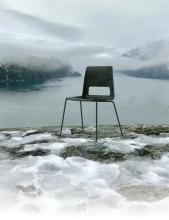
The Norwegian company NCP delivers sustainable furniture from recycled plastic materials through innovation and design. The S-1500 chair, designed by Snøhetta, is produced by NCP showing how plastic waste from Norway’s fish farming can be transformed into a sustainable design object with an expected lifetime of at least 50 years.
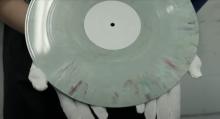
Music business can be circular, too! WMfono makes vinyl records from the waste that remains after cutting other records. Kayax label then packs the discs in recycled paper and employs a protection film made from maize.